
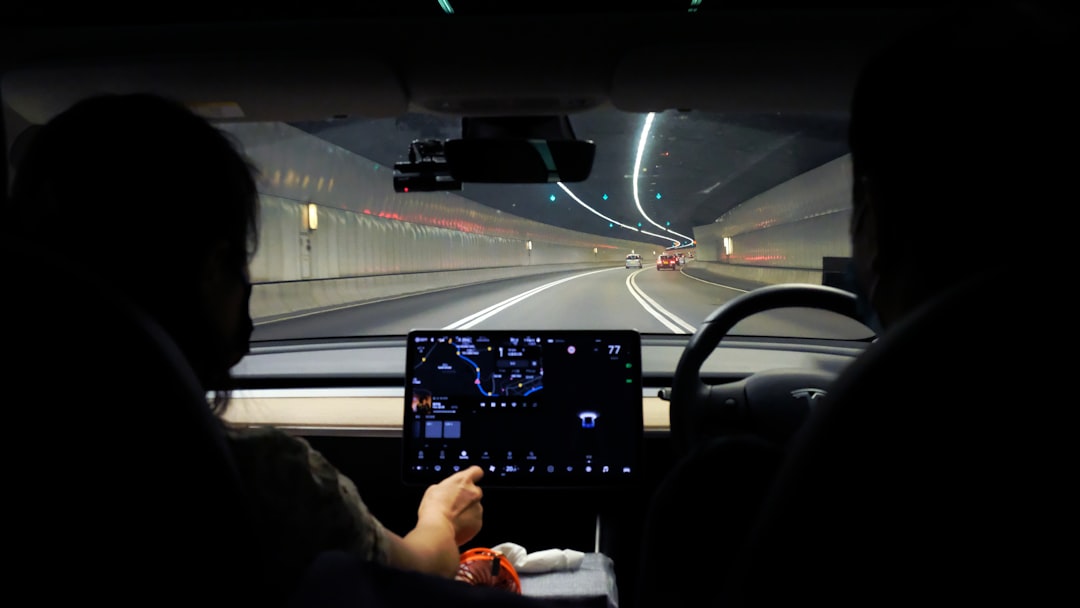
A few weeks ago, a colleague of mine—a seasoned embedded systems engineer who’s spent the better part of a decade wiring up CAN bus harnesses—slid into my chat and said something I didn’t expect: “I just hailed a robotaxi and spent the whole ride staring at the steering wheel because nobody was touching it.” He wasn’t in a tech demo. He wasn’t in a controlled test environment. He was just… commuting. That moment stuck with me, because it’s exactly the kind of quiet milestone that signals a real, irreversible shift. And in 2026, autonomous driving AI software isn’t just shifting—it’s hitting what analysts are calling a genuine inflection point.
So let’s dig into what’s actually happening under the hood, who’s driving this (pun very much intended), and what it means for engineers, consumers, and the industry as a whole.
🚦 2026: The Year Autonomy Goes From Demo to Daily Driver
Mobility once again emerged as a dominant theme at the 2026 Consumer Electronics Show (CES), and more notably, for the first time since the early 2020s, the industry’s center of gravity shifted away from electric vehicles and back toward autonomous driving. That’s a big deal. For years, the EV boom was the headline; now it’s the software stack riding inside those EVs that’s stealing the spotlight.
Autonomous vehicles in 2026 represent a technology at an inflection point — after years of development, the industry has achieved remarkable things, including fully driverless robotaxis operating commercially and sophisticated driver assistance in millions of vehicles.
From a practicing engineer’s point of view, what’s changed isn’t just the hardware getting faster — it’s the AI architecture philosophy that’s undergone a fundamental rewrite. Let’s break it down.
🧠 The Big Architecture Shift: End-to-End AI & Vision-Language-Action Models
Traditional autonomous driving systems used separate modules for perception, planning, and control — losing information at each handoff. End-to-end autonomy architectures have the potential to change that. And in 2026, this is no longer theoretical. It’s shipping in production vehicles.
The hottest term on every AV engineer’s whiteboard right now is VLA (Vision-Language-Action). The VLA model has higher scenario reasoning and generalization capabilities, which is of great significance for the evolution of intelligent assisted driving technology. In the long run, during the technological leap from Level 2 assisted driving to Level 4 autonomous driving, VLA is expected to become the key springboard.
The reason VLA is such a big engineering leap? It fuses visual perception, natural language reasoning, and physical action generation into a single model — meaning the car doesn’t just see the world, it reasons about it like a human would. NVIDIA unveiled Alpamayo, a family of open-source AI models designed to solve the “long tail” problem of autonomous driving — those rare, weird edge cases that usually cause self-driving stacks to disengage or fail. The flagship is Alpamayo 1, a 10-billion-parameter Vision-Language-Action (VLA) model.
With foundation models, a vehicle encountering a mattress in the road or a ball rolling into the street can now reason its way through scenarios it has never seen before, drawing on information learned from vast training datasets. Any field engineer who’s watched a legacy LIDAR stack completely freeze at an unusual occlusion scenario will understand why this is enormous.
📊 Market Data: The Numbers Behind the Boom
Data analysts at Wood Mackenzie say that 2026 is the turning point for autonomous vehicles, with the industry’s global fleet exploding to ten times its current size by 2030, meaning deployment of more than 100,000 driverless taxis globally.
Robotaxis are where IDTechEx expects most companies to develop advanced autonomous driving technology, with deep learning training methods, transformers, and end-to-end software being key drivers to developing and scaling this.
This transition is being enabled by meaningful advances in both hardware and software, driven by the rapid scaling of the broader AI ecosystem. NVIDIA’s Alpamayo physical AI platform exemplifies this shift, aiming to accelerate autonomous driving development by dramatically expanding real-world and simulated data, a critical step toward higher levels of autonomy.
🏢 Who’s Actually Shipping: Global Case Studies
Let’s talk real-world players, because the landscape in 2026 is more competitive — and more international — than ever.
NVIDIA + Mercedes-Benz (USA/Germany): NVIDIA is moving beyond just “perceiving” the road to “reasoning” about it, with a new family of open-source models called Alpamayo which will power new autonomous and driver-assistance features — starting with Mercedes-Benz as soon as this quarter. The fact that Alpamayo outputs a “reasoning trace” is huge for regulators who are terrified of black-box AI models crashing cars without us knowing why.
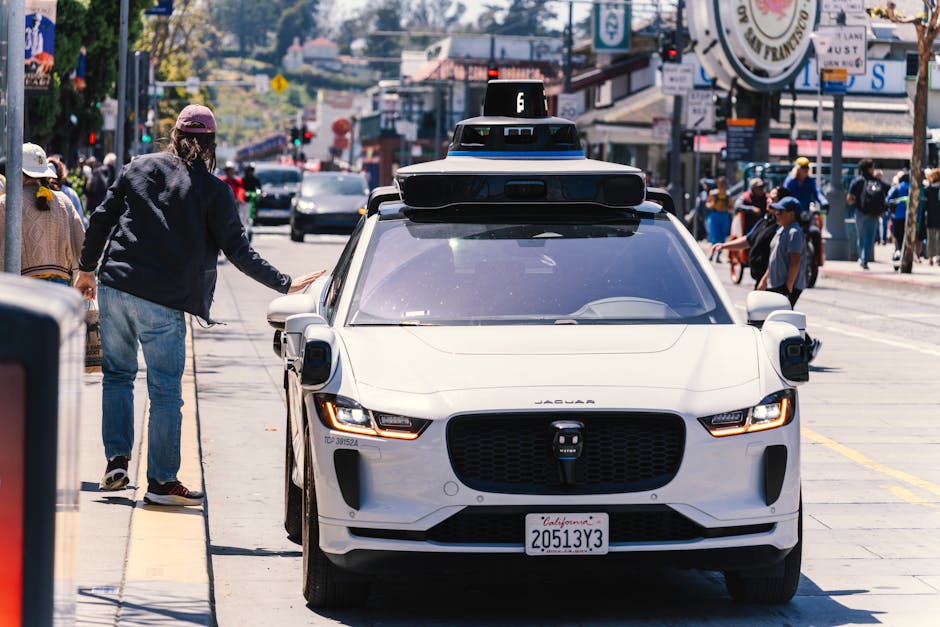
Waymo (USA): Waymo plans to deliver one million rides weekly by year-end, expanding to 27 US cities. Their “Waymo Foundation Model” is a hybrid architecture that the company says provides significant benefits over pure end-to-end or modular approaches because it “leverages the full expressibility of learned embeddings as a rich interface between model components.”
Wayve (UK): Wayve’s AI technology does not require HD maps, allowing it to scale easily to new roads and cities, and the sensor and hardware-agnostic AI software is compatible with any type of vehicle. Wayve has secured $1.5B to deploy its global autonomy platform.
China’s Automakers (XPeng, Chery, GAC): In 2026, XPeng Motors plans to launch models with both hardware and software reaching the Level 4 autonomous driving level in mass production. Chery Automobile has announced plans to mass-produce Level 3 autonomous driving vehicles in 2026 with the Falcon Intelligent Driving system — the Falcon 900 is equipped with a new-generation VLA + world model system, with an AI computing power of up to 1,000 TOPS.
Nuro + Lucid + Uber (USA): The Nuro Driver is validated with 5+ years of driverless deployments and over 1.7M autonomous miles with zero at-fault incidents. Lucid, Nuro, and Uber unveiled a production-intent global robotaxi at CES, announcing autonomous on-road testing to begin in 2026.
Tesla (USA): Tesla has begun rolling out its Spring 2026 software update, introducing new features aimed at expanding in-car AI functionality, improving safety systems, and increasing adoption of its Full Self-Driving (FSD) subscription — including a redesigned self-driving app, hands-free voice activation through “Hey Grok,” and automatic overnight software installation.
Li Auto’s MindVLA (China): Li Auto released a new-generation autonomous driving architecture — MindVLA — by integrating spatial intelligence, language intelligence, and behavioral intelligence, endowing the autonomous driving system with 3D spatial understanding, logical reasoning, and behavior-generation capabilities, with plans to apply it in mass production in 2026.
🔑 Key Technologies Powering Autonomous Driving AI in 2026
- End-to-End AI Stacks: Unified perception-planning-control pipelines replacing fragmented modular systems, dramatically reducing information loss between stages.
- VLA (Vision-Language-Action) Models: VLA models offer higher scenario reasoning and generalization capabilities, enabling vehicles to handle truly novel situations.
- Foundation Models for Driving: Foundation models can tap internet-scale knowledge, not just proprietary driving fleet data, giving AVs unprecedented contextual awareness.
- Mapless Autonomy: Systems like Wayve eliminate the need for pre-built HD maps, making geographic scalability far more practical and cost-efficient.
- Sensor Fusion + AI: The achievement of high reliability in self-driving car AI depends on sensor fusion technology, which merges sensor inputs into one unified, accurate driving environment depiction — ensuring robustness even in difficult weather or lighting conditions.
- OTA Software Updates: The ADAS and AD software market is increasingly reliant on OTA (over-the-air) updates as a key mechanism to continuously improve deployed fleets without hardware recalls.
- Open-Source AI Ecosystems: By giving away the model and the simulator, NVIDIA ensures that startups and other automakers get hooked on their CUDA ecosystem — creating a powerful network effect.
- 5G-V2X Integration: Faster data exchange between vehicles and infrastructure will improve safety and coordination as 5G networks mature alongside AV deployments.
- Reinforcement Learning for Motion Planning: Motion planning has improved through reinforcement learning, where systems learn from trial and error, just like a human driver.
- Regulatory AI Transparency (Reasoning Traces): Systems now output explainable decision logs, directly addressing the black-box trust problem with regulators worldwide.
🔧 The Engineer’s Reality Check: What’s Still Hard
Let’s be honest — from a hands-on engineering perspective, there are still real, painful challenges. The “long tail” problem (rare edge cases) has gotten better with VLA models, but it hasn’t been solved. I’ve personally debugged a sensor fusion stack that worked perfectly in 10,000 simulated scenarios but completely choked when a semi-truck’s trailer created a mirror reflection in rain. No dataset had that combo.
True Level 5 autonomy — anywhere, anytime, under any condition — may still be years or decades away. The path forward involves not just technical breakthroughs but regulatory frameworks, public acceptance, and economic viability.
And from a liability standpoint, the regulatory picture is finally beginning to clarify. China has clarified the division of rights and responsibilities for Level 3 autonomous driving: when a vehicle is autonomously driving on a limited-section road at a speed of no more than 80 kilometers per hour, in the event of an accident, if the system is in the activated state, the automaker may bear the primary responsibility. This is a precedent-setting development that other markets are watching closely.
💡 What Should Developers and Consumers Do Right Now?
If you’re an engineer in the AV or ADAS space, this is the moment to get deeply familiar with VLA architectures and end-to-end training pipelines. NVIDIA’s open-source Alpamayo models are transformative, as their access and capabilities will enable researchers to train at unprecedented scale — giving the flexibility and resources needed to push autonomous driving into the mainstream. Download it, fine-tune it on your domain data, and start benchmarking.
If you’re a consumer or fleet operator, the realistic near-term opportunity is in the mature ADAS software market (SAE level 1 to 2+), which continues to dominate the ADAS and AD market as a whole. Level 2+ systems available today — from Tesla FSD to GM Super Cruise to Mercedes MB.DRIVE ASSIST PRO — offer genuinely impressive capabilities, especially when combined with OTA updates that improve the system monthly.
Rather than waiting for “full” autonomy before engaging with the technology, consider adopting Level 2+ systems now for the real-world fleet data they generate. That data becomes your competitive moat when Level 4 systems arrive. For those developing platforms, integrating with open ecosystems like NVIDIA’s DRIVE stack or exploring licensing options from providers like Nuro gives you a faster, safer path to market than building from scratch.
Editor’s Comment : The 2026 autonomous driving AI software landscape is not a promise anymore — it’s a product. VLA models, open-source AI stacks, and the convergence of foundation model intelligence with real-time vehicular control have collapsed timelines that once seemed unreachable. The engineers who thrive in this space will be those who stop treating autonomy as a single destination and start treating it as a continuously deployable software service. The road is long, but for the first time in a decade, the map is starting to look accurate.
📚 관련된 다른 글도 읽어 보세요
- 공식 문서엔 없는 진짜 DevOps 통합 전략: 현장 15년이 알려주는 2026년 생존 로드맵
- Code Review Best Practices in 2026: The Engineer’s Field Guide to Shipping Better Software Faster
- 코드 리뷰 제대로 안 하면 팀 속도 40% 날아간다 — 2026 소프트웨어 엔지니어링 코드 리뷰 베스트 프랙티스 완전 정복
태그: []