Picture this: You’re in a self-driving car zipping through downtown Seoul, and the vehicle needs to make a split-second decision to avoid a cyclist. Should it wait for a signal to bounce all the way to a data center in Virginia and back? Absolutely not — and that tiny moment of clarity is exactly what sparked the edge computing revolution we’re living through in 2026.
But here’s the thing: cloud computing isn’t going anywhere either. In fact, both technologies are thriving — just in very different lanes. Let’s think through this together, because choosing between edge and cloud (or knowing when to use both) is quickly becoming one of the most important tech decisions for businesses, developers, and even everyday consumers.
🔍 What Are We Actually Comparing Here?
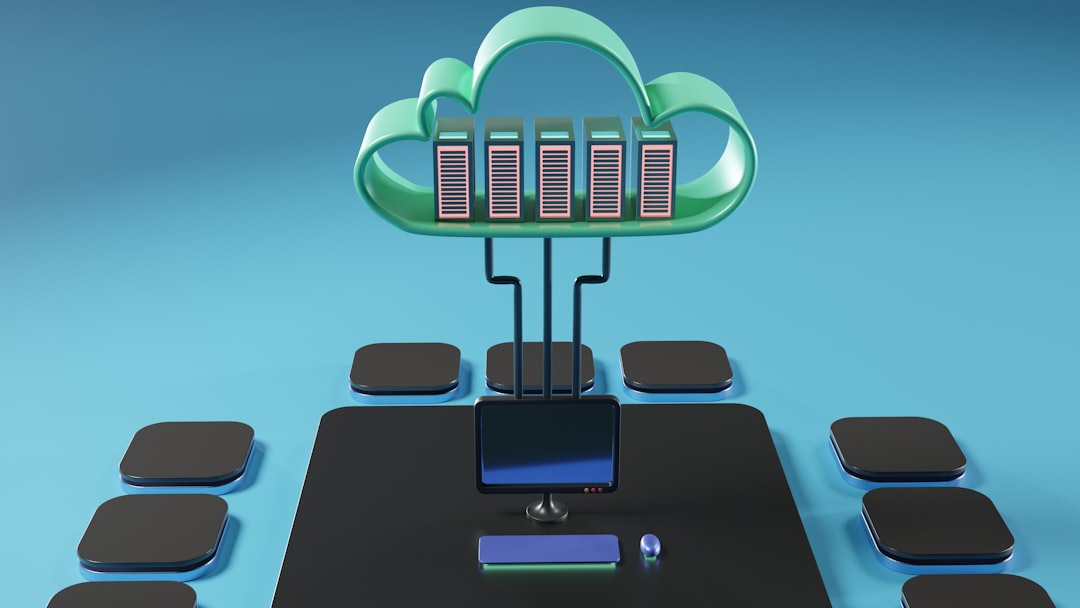
Before we dive into the numbers, let’s get grounded. Cloud computing means your data and processing happen on remote servers — massive, centralized data centers run by giants like AWS, Google Cloud, and Microsoft Azure. You send data up, it gets processed, you get results back. Simple, scalable, and powerful.
Edge computing, on the other hand, brings the processing closer to where the data is generated — on local devices, gateways, or mini data centers near you. Think of a smart factory floor where sensors process quality-control data on-site rather than shipping every data point to the cloud.
📊 By the Numbers: Where Things Stand in 2026
Here’s where it gets genuinely fascinating. According to IDC’s 2026 Global DataSphere Report, approximately 65% of enterprise-generated data is now processed outside traditional centralized data centers — a figure that was just 10% back in 2018. The edge computing market is projected to hit $232 billion globally by end of 2026, while cloud services continue their own growth trajectory toward $900 billion.
Latency tells the clearest story: cloud processing typically introduces 50–150 milliseconds of round-trip delay, while edge processing can reduce that to 1–5 milliseconds. For applications where milliseconds matter — surgical robots, autonomous vehicles, real-time fraud detection — that gap is the difference between success and catastrophic failure.
On the flip side, cloud computing still dominates in raw storage capacity, long-term analytics, and global accessibility. A startup in Lagos can access the same enterprise-grade AI tools as a Fortune 500 in New York — that democratization is genuinely remarkable and something edge simply can’t replicate at that scale.
🌍 Real-World Examples That Make It Click
South Korea’s Smart Manufacturing Push: Hyundai’s advanced EV assembly plants in Ulsan have deployed edge computing nodes directly on the factory floor. These nodes handle real-time defect detection using computer vision — processing over 4,000 images per minute locally without a single cloud round-trip. The result? A 34% reduction in defect escape rates reported in their 2025 annual sustainability brief. Cloud still plays a role here — for aggregating weekly production analytics and training the AI models — but the mission-critical work lives at the edge.
Netflix’s Hybrid Content Delivery: Netflix’s Open Connect appliances (essentially edge servers placed inside ISP networks) cache popular content locally, reducing backbone bandwidth usage by over 95% in regions with high viewership density. Their cloud infrastructure handles user account management, personalization algorithms, and content encoding. This hybrid model is a textbook example of letting each technology do what it does best.
Germany’s Rural Healthcare Network: In 2025, Bavaria launched a telemedicine initiative where rural clinics use edge devices to run real-time diagnostic AI for ECG analysis. Patient data never has to travel far — reducing both latency and GDPR compliance headaches — while anonymized aggregate data flows to cloud systems for population health research.
⚖️ Head-to-Head: When to Choose What
- Choose Cloud if: You need massive scalability on-demand, collaborative access from multiple global locations, cost-effective long-term data storage, or you’re running complex AI/ML training workloads that need enormous compute resources.
- Choose Edge if: Your application is latency-sensitive (under 10ms requirements), you’re operating in areas with unreliable internet connectivity, you handle sensitive data that must stay local for compliance reasons, or you’re managing IoT deployments with thousands of constantly-streaming sensors.
- Choose a Hybrid Architecture if: You need real-time local responses and big-picture analytics — which, honestly, describes most serious enterprise use cases in 2026. The edge handles the hot, immediate data; the cloud handles the deep, strategic analysis.
- Watch your costs carefully: Edge hardware has upfront CapEx that cloud’s OpEx model avoids. But excessive cloud data egress fees (what you pay to move data out of the cloud) can make edge more economical at scale. Run the numbers for your specific data volumes.
- Security is a two-sided coin: Cloud providers offer enterprise-grade security infrastructure most companies couldn’t build themselves. But centralizing data creates a single high-value target. Edge distributes risk — but also distributes the security management burden.
🚀 The Emerging Middle Ground: Fog Computing and Beyond
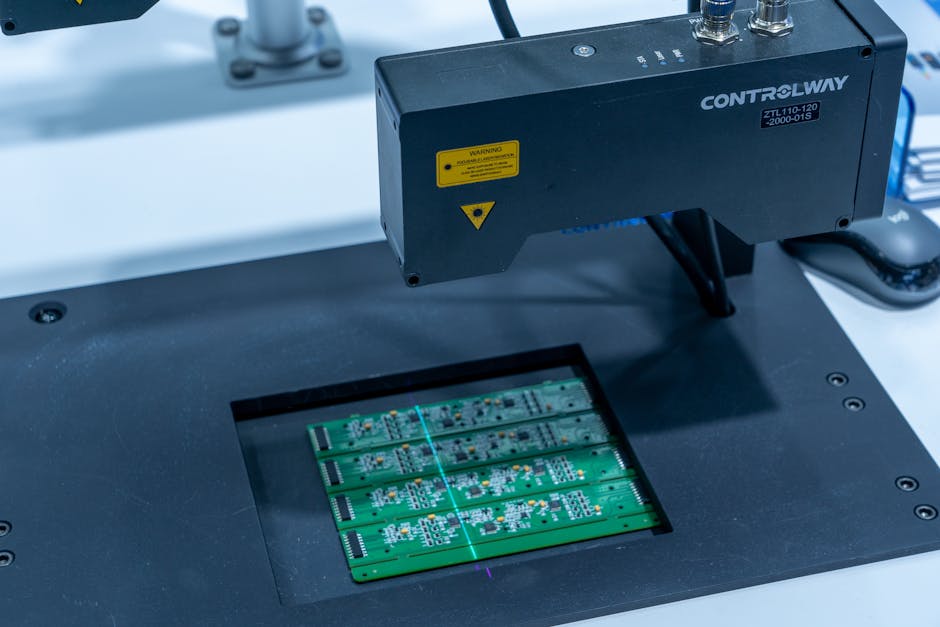
Worth mentioning as we think through this: fog computing is gaining traction as an architectural layer between pure edge and pure cloud. Fog nodes — think of them as regional micro-data centers — aggregate data from multiple edge devices, perform intermediate processing, and selectively push insights to the cloud. Cisco and Intel have been particularly active in this space through 2025 and into 2026. It’s not a buzzword to impress people at parties — it’s a genuinely practical solution for smart city infrastructure, where you want neighborhood-level data aggregation without routing everything through a central cloud.
💡 Realistic Alternatives Based on Where You Actually Are
Let’s be real about your situation, because “it depends” is only useful if we work through what it depends on.
If you’re a small business or solo developer, full cloud (AWS, Google Cloud, Azure) is almost certainly your best starting point. The managed services, global CDN options, and pay-as-you-go pricing are hard to beat when you’re not running latency-critical applications. Don’t over-engineer for edge just because it sounds cutting-edge.
If you’re a mid-size company with IoT deployments or physical operations (retail with in-store analytics, logistics with fleet tracking, clinics with medical devices), a hybrid approach makes serious sense. Start with cloud, identify your latency or compliance bottlenecks, then introduce edge nodes where the math works out.
If you’re an enterprise or municipality building critical infrastructure — autonomous vehicle networks, smart grid management, industrial automation — edge-first architecture with cloud backup is likely your path. The investment is substantial, but the operational resilience and performance gains justify it.
The honest truth in 2026? The edge vs. cloud debate is a little like asking whether you need a car or public transit. The answer depends entirely on where you live, where you need to go, and what you’re carrying. The smartest players are building systems that can use both — fluidly, intelligently, and economically.
Editor’s Comment : What I find genuinely exciting about this moment in 2026 is that we’ve moved past the theoretical debate and into real, documented proof points. The Hyundai factory floor, Bavaria’s rural clinics, Netflix’s edge-delivery network — these aren’t pilot programs anymore, they’re scaled realities. My honest take? If you’re making technology decisions today without at least mapping your latency requirements and data residency needs, you’re flying blind. Neither edge nor cloud is inherently superior — but the right architecture for your specific constraints is out there, and thinking it through carefully (rather than defaulting to whatever sounds trendiest) will pay dividends for years to come. The infrastructure decisions you make in 2026 are going to shape what you can build in 2028 and beyond.
📚 관련된 다른 글도 읽어 보세요
- How to Implement Event-Driven Architecture in 2026: A Practical Guide for Modern Systems
- AI Agent Technology in 2026: How Autonomous Systems Are Quietly Reshaping Everything You Do
- 이벤트 드리븐 아키텍처 구현 방법 완벽 가이드 2026 — 왜 지금 EDA인가?
태그: [‘edge computing’, ‘cloud computing’, ‘edge vs cloud 2026’, ‘IoT infrastructure’, ‘hybrid cloud architecture’, ‘latency optimization’, ‘enterprise technology trends’]
Leave a Reply