Category: Uncategorized

  • Cloud Native Architecture Design Principles in 2026: What Every Builder Needs to Know Before Writing a Single Line of Code

    Picture this: it’s 2019, and a mid-sized fintech startup just deployed their shiny new monolithic application to a single beefy server. Six months later, Black Friday traffic hits, the server chokes, and they’re staring at $2.3 million in lost transactions over a four-hour outage. Fast forward to today — that same company rebuilt everything from scratch using cloud native principles and now handles 40x the peak load with zero planned downtime. I’ve watched this story play out dozens of times, and every single time, the turning point was the same: someone finally sat down and asked, “What does cloud native actually mean at the architecture level?”

    Let’s think through this together, because the phrase “cloud native” gets thrown around so casually in 2026 that it’s started to lose meaning. It’s not just about running containers on Kubernetes. It’s a fundamentally different philosophy about how software should be designed, built, and operated.
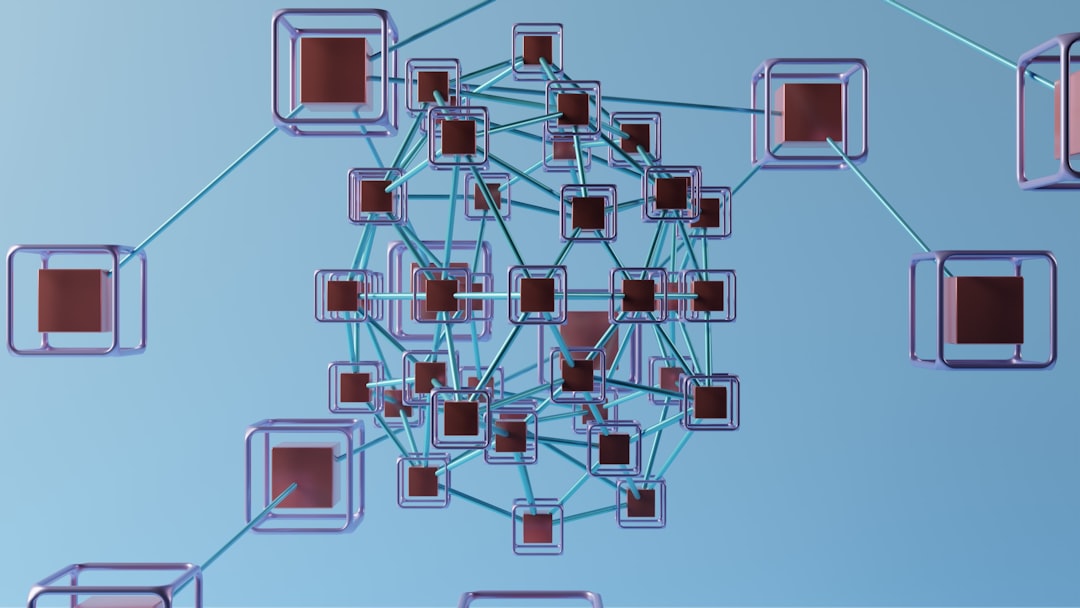
    cloud native architecture diagram microservices kubernetes 2026

    What Cloud Native Architecture Actually Means (Beyond the Buzzword)

    The Cloud Native Computing Foundation (CNCF) defines cloud native systems as those that are scalable, resilient, manageable, and observable — deployed in modern dynamic environments like public, private, and hybrid clouds. But let’s unpack what that looks like in practice as of 2026.

    According to the CNCF’s 2026 Annual Survey, 87% of organizations are now running containerized workloads in production, up from 67% in 2022. More tellingly, organizations that fully adopted cloud native design principles reported 43% faster time-to-market and 31% reduction in infrastructure costs compared to lift-and-shift cloud adopters. The gap between “we use the cloud” and “we are cloud native” is measurable, and it’s significant.

    The Core Design Principles — Let’s Break Them Down

    1. Design for Failure (Not Just Against It)
    This is the principle that trips up teams coming from traditional infrastructure backgrounds. In classical architecture, you design to prevent failure. In cloud native, you design assuming failure is inevitable and continuous. Netflix’s Chaos Engineering practice — deliberately injecting failures into production — is the most famous example, but in 2026, this mindset has become table stakes. Tools like Chaos Mesh and LitmusChaos have made chaos engineering accessible even to smaller engineering teams.

    2. Loose Coupling and High Cohesion
    Each service should do one thing well (high cohesion) and communicate with other services through well-defined, stable interfaces (loose coupling). The practical implication? If you need to deploy Service A, Service B should have absolutely no idea it happened. If a change in one service requires coordinated deployments across three others, you have a distributed monolith — not a microservices architecture.

    3. API-First Design
    Before writing implementation code, define the contract. OpenAPI Specification 3.1 and AsyncAPI 3.0 have become the dominant standards in 2026 for synchronous and event-driven APIs respectively. This principle enables parallel development across teams and makes your system’s boundaries explicit from day one.

    4. Observability as a First-Class Citizen
    The classic monitoring question was “Is the system up?” Cloud native observability asks “Why is the system behaving this way?” This means instrumenting your code for the three pillars: metrics (what is happening), logs (what happened), and traces (why it happened and where time was spent). The OpenTelemetry project, now at version 2.x, has largely standardized how teams collect and export this data.

    5. Immutable Infrastructure
    Servers and containers should never be modified after deployment. If something needs to change, you build a new image and deploy it. This eliminates the dreaded “configuration drift” problem where production environments slowly diverge from what was originally deployed.

    6. Declarative Configuration and GitOps
    Your infrastructure and application configuration should describe the desired state, not the steps to get there. Kubernetes is built entirely on this principle. GitOps — using Git as the single source of truth for both application code and infrastructure config — has matured enormously, with tools like Flux and ArgoCD now handling some of the world’s most complex deployments.

    7. Stateless Services Where Possible
    Services should not hold session state internally. State belongs in purpose-built stores (databases, caches, message queues). This is what enables horizontal scaling — if any instance of your service can handle any request, you can spin up 10 or 10,000 of them transparently.

    Real-World Examples: Who’s Getting This Right in 2026?

    Kakao (South Korea): After experiencing a catastrophic data center fire in 2022 that took services offline for over 127 hours, Kakao undertook one of the most publicized cloud native rebuilds in Asia. By 2025, they had re-architected their core messaging platform across multi-region active-active deployments using a cell-based architecture — a cloud native pattern that isolates failure to a specific “cell” of users rather than taking down the entire system. Their current RTO (Recovery Time Objective) for regional failures is under 90 seconds.

    Shopify (Canada/Global): Shopify’s journey to cloud native is a masterclass in incremental migration. Rather than a big-bang rewrite, they decomposed their Rails monolith service by service over several years, using the “strangler fig” pattern. By 2026, their platform processes over 6 million requests per second at peak, with individual microservices scaling independently during events like BFCM (Black Friday/Cyber Monday).

    Toss (South Korea): The fintech super-app has become a regional reference architecture for cloud native financial services. Their use of event sourcing and CQRS (Command Query Responsibility Segregation) patterns — both advanced cloud native design choices — allows them to maintain a complete, immutable audit log of every financial transaction while still serving read-heavy dashboards at millisecond response times.

    cloud native design principles microservices observability GitOps diagram

    The Building Blocks: A Practical Checklist

    • Containerization: Package applications and their dependencies in containers (Docker remains dominant, but containerd is increasingly used directly)
    • Container Orchestration: Kubernetes for workload scheduling, scaling, and self-healing (managed options: GKE, EKS, AKS)
    • Service Mesh: Istio or Cilium for service-to-service communication, security (mTLS), and traffic management
    • CI/CD Pipelines: Automated build, test, and deployment — GitHub Actions, Tekton, and ArgoCD are dominant in 2026
    • Distributed Tracing: OpenTelemetry + Jaeger or Grafana Tempo to understand request flows across services
    • Event Streaming: Apache Kafka or Redpanda for decoupled, asynchronous communication between services
    • Secrets Management: HashiCorp Vault or cloud-native equivalents (AWS Secrets Manager, GCP Secret Manager) — never hardcode credentials
    • Policy as Code: Open Policy Agent (OPA) or Kyverno for enforcing governance rules at the infrastructure level

    Where Teams Commonly Go Wrong (And How to Think About It Differently)

    The most common mistake I see in 2026 is microservices-as-a-default. Teams hear “cloud native” and immediately start splitting everything into tiny services — before they even understand their domain boundaries. This almost always produces a distributed monolith that’s harder to operate than the original system.

    A better mental model: start with a well-structured modular monolith. Use clear internal module boundaries. Deploy it on cloud infrastructure using containers and proper CI/CD. Then, when you have genuine scaling bottlenecks or team autonomy needs that a monolith can’t accommodate, extract services based on real data. This is the “modular monolith first” approach advocated by architects like Sam Newman and Martin Fowler, and it’s far more pragmatic for teams under 50 engineers.

    Realistic Alternatives Based on Your Situation

    Not every team needs the full cloud native stack on day one. Here’s how I’d think about it based on where you are:

    Early-stage startup (under 10 engineers): Focus on containerization, a managed Kubernetes service (like GKE Autopilot), and solid CI/CD. Don’t introduce a service mesh yet — the operational overhead isn’t worth it. A single well-structured service with good observability beats a poorly designed microservices architecture every time.

    Growth-stage company (10-100 engineers): This is where domain-driven design becomes essential for identifying service boundaries. Invest in a platform engineering team dedicated to the internal developer experience. GitOps with ArgoCD will pay dividends quickly at this stage.

    Enterprise (100+ engineers): Multi-cluster Kubernetes, cell-based architecture for fault isolation, and mature FinOps practices become critical. The tooling complexity is real — budget for it, both financially and in terms of engineering headcount.

    The honest truth is that cloud native architecture is not a destination — it’s a continuous practice. The principles don’t change, but the tools and your implementation will evolve as your system and organization grow. The teams that succeed are the ones who internalize the why behind each principle, not just the what.

    Editor’s Comment: If there’s one thing to take away from all of this, it’s that cloud native is fundamentally about optionality — building systems that can change, scale, and recover without heroic manual effort. The best architecture decision you can make today is the one that keeps your options open tomorrow. Start small, instrument everything from the beginning, and let real usage data drive your decomposition decisions. The teams that are winning in 2026 aren’t the ones with the most sophisticated toolchain — they’re the ones who deeply understand their problem domain and apply these principles with discipline and intentionality.

    태그: [‘cloud native architecture’, ‘microservices design principles’, ‘Kubernetes 2026’, ‘cloud native development’, ‘distributed systems design’, ‘GitOps best practices’, ‘platform engineering’]

  • 2026년 클라우드 네이티브 아키텍처 설계 원칙 완전 정복 – 왜 지금 당장 바꿔야 할까?

    얼마 전 지인이 운영하는 스타트업이 서비스 출시 첫날 트래픽 폭증으로 서버가 통째로 다운된 적이 있었어요. 모놀리식(Monolithic) 구조로 급하게 개발한 탓에, 특정 기능 하나가 과부하를 받자 전체 시스템이 함께 멈춰버린 거죠. 결국 그 팀은 몇 달 뒤 클라우드 네이티브 아키텍처로의 전환을 결정했고, 비슷한 트래픽 상황에서도 끄떡없이 서비스를 유지했습니다. 이 이야기, 사실 지금 이 순간에도 수많은 개발 조직에서 반복되고 있는 현실이라고 봐요.

    2026년 현재, 클라우드 네이티브(Cloud Native)는 더 이상 대기업의 전유물이 아닙니다. 중소기업부터 1인 스타트업까지, 서비스의 생존 경쟁력을 좌우하는 핵심 인프라 패러다임으로 자리 잡았죠. 오늘은 클라우드 네이티브 아키텍처가 정확히 무엇이고, 어떤 설계 원칙을 따라야 하는지 함께 차근차근 살펴보겠습니다.

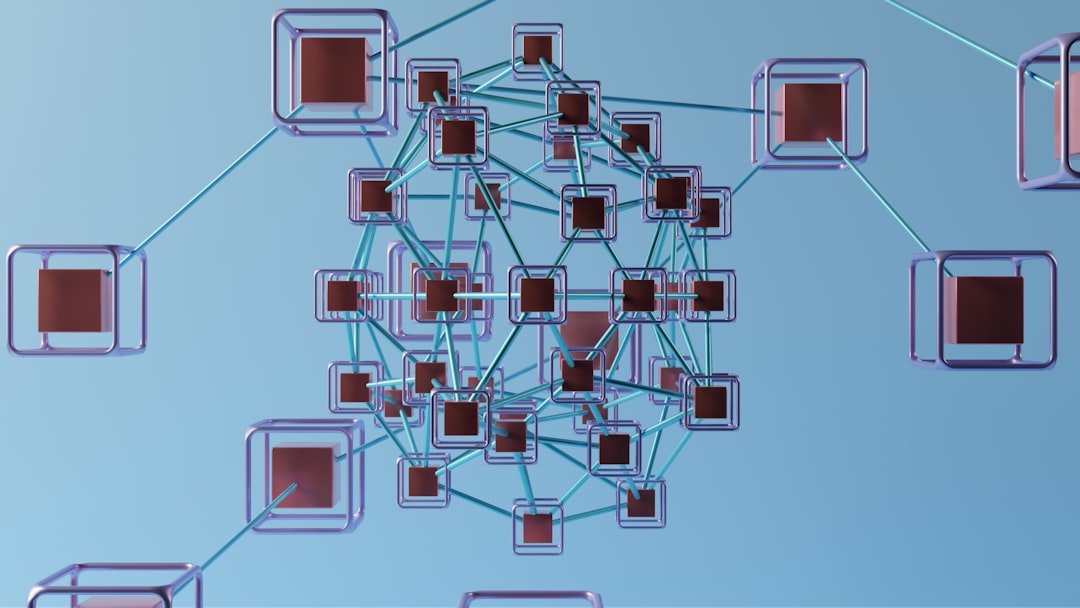
    cloud native architecture diagram microservices kubernetes 2026

    📊 본론 1 – 숫자로 보는 클라우드 네이티브의 현주소

    클라우드 네이티브가 왜 이렇게 주목받는지, 먼저 데이터로 살펴볼게요.

    • CNCF(Cloud Native Computing Foundation) 2026 연례 보고서에 따르면, 전 세계 기업의 약 78%가 프로덕션 환경에서 컨테이너 기반 워크로드를 운영 중이라고 합니다. 2022년 대비 약 22%p 증가한 수치예요.
    • 쿠버네티스(Kubernetes) 채택률은 92%에 육박하며, 사실상 컨테이너 오케스트레이션의 표준이 됐다고 봐도 무방합니다.
    • Gartner의 최신 분석에서는, 클라우드 네이티브 전환에 성공한 기업이 그렇지 않은 기업 대비 배포 주기는 최대 46배 빠르고, 장애 복구 시간은 약 60% 단축된다고 밝히고 있어요.
    • 반면 레거시 시스템을 그대로 유지하는 기업의 경우, 유지보수 비용이 전체 IT 예산의 평균 68%를 차지한다는 분석도 있습니다. 새로운 기능 개발에 쓸 여력이 거의 없는 셈이죠.

    이 숫자들이 말해주는 건 단순히 “트렌드”가 아니에요. 클라우드 네이티브로의 전환은 비즈니스 생존과 직결된 전략적 선택이라고 봅니다.

    🏗️ 클라우드 네이티브 아키텍처의 핵심 설계 원칙 6가지

    그렇다면 실제로 어떤 원칙에 따라 설계해야 할까요? 업계에서 널리 통용되는 핵심 원칙들을 정리해 봤어요.

    • ① 마이크로서비스(Microservices) 분리 – 단일 거대 애플리케이션을 독립적으로 배포·확장 가능한 작은 서비스 단위로 쪼개는 것이 출발점입니다. 각 서비스는 자체 데이터베이스와 비즈니스 로직을 가지며, 느슨하게 결합(Loosely Coupled)되어야 해요.
    • ② 컨테이너화(Containerization) – Docker와 같은 컨테이너 기술로 환경에 구애받지 않는 일관된 실행 환경을 구성합니다. “내 환경에서는 되는데”라는 말이 사라지는 지점이죠.
    • ③ 불변 인프라(Immutable Infrastructure) – 서버를 수동으로 패치·수정하는 대신, 변경이 필요할 때 새 이미지로 통째로 교체하는 방식입니다. 재현 가능성과 안정성이 크게 올라가요.
    • ④ 선언적 API와 GitOps – 인프라 상태를 코드로 선언(IaC, Infrastructure as Code)하고 Git을 단일 소스 오브 트루스(Single Source of Truth)로 삼아 관리하는 방식입니다. ArgoCD, Flux 같은 도구가 이를 자동화해 줘요.
    • ⑤ 자동화된 확장성(Auto-scaling) – 트래픽 변화에 따라 서비스 인스턴스를 자동으로 늘리거나 줄이는 HPA(Horizontal Pod Autoscaler) 같은 메커니즘을 기본 설계에 포함해야 합니다.
    • ⑥ 관찰 가능성(Observability) – 로그(Logging), 메트릭(Metrics), 트레이싱(Tracing), 세 가지를 아우르는 o11y 체계를 처음부터 구축해야 해요. 문제가 터진 다음에 “어디서 났지?” 하고 찾는 건 너무 늦어요.

    🌏 본론 2 – 국내외 클라우드 네이티브 전환 사례

    넷플릭스(Netflix)는 클라우드 네이티브 아키텍처의 교과서 같은 사례입니다. 2008년 데이터베이스 장애로 사흘간 서비스가 마비된 이후, 이들은 7년에 걸쳐 모놀리식 아키텍처를 수백 개의 마이크로서비스로 완전히 해체했어요. 지금 넷플릭스는 하루 수억 건의 API 요청을 처리하면서도 안정적인 스트리밍을 유지하고 있습니다. 이 과정에서 개발한 Hystrix(서킷 브레이커), Eureka(서비스 디스커버리) 같은 도구들은 오픈소스로 공개되어 업계 표준처럼 쓰이고 있죠.

    국내 사례로는 카카오를 빼놓을 수 없어요. 카카오는 자체 프라이빗 클라우드(카카오 클라우드)를 기반으로 쿠버네티스 생태계를 전사적으로 도입했고, 카카오뱅크·카카오페이 같은 금융 서비스도 이 위에서 운영되고 있는 것으로 알려져 있습니다. 특히 금융권 특성상 99.99%의 가용성(연간 다운타임 약 52분 이하)을 요구하는데, 클라우드 네이티브 설계 없이는 사실상 달성하기 어렵다는 게 업계의 공통된 시각이에요.

    쿠팡의 경우도 눈여겨볼 만합니다. 수백만 건의 주문이 몰리는 로켓배송 시스템의 피크 트래픽을 감당하기 위해, MSA(마이크로서비스 아키텍처)와 오토스케일링을 결합한 구조를 운영 중입니다. 주문·결제·재고·배송 각각의 도메인이 독립 서비스로 분리돼 있어서, 한 부분에 이슈가 생겨도 전체 서비스가 중단되는 일이 없는 구조라고 봐요.

    kubernetes microservices deployment pipeline CI CD cloud infrastructure

    ⚠️ 흔히 저지르는 설계 실수들

    • 마이크로서비스를 너무 잘게 쪼개는 것 – 서비스 하나가 단순히 DB에서 값 하나 읽어오는 수준이라면, 오히려 네트워크 오버헤드와 운영 복잡성만 늘어날 수 있어요. 적절한 도메인 경계(Domain Boundary)를 기준으로 분리하는 게 핵심입니다.
    • 공유 데이터베이스 사용 – 서비스 간에 DB를 공유하면 결국 모놀리식과 다를 게 없어요. 각 서비스는 자체 데이터 스토어를 소유해야 합니다.
    • 관찰 가능성 체계를 나중으로 미루는 것 – “일단 개발부터, 모니터링은 나중에”라는 생각은 반드시 나중에 큰 부채로 돌아옵니다.
    • 보안을 인프라 마지막 레이어로만 처리하는 것 – DevSecOps 관점에서, 보안은 설계 단계부터 내재화(Shift-left Security)되어야 해요.

    🛠️ 결론 – 2026년, 어디서부터 시작해야 할까?

    클라우드 네이티브 전환이 막막하게 느껴지는 건 당연한 일이에요. 처음부터 모든 것을 뒤엎으려 하면 실패할 가능성이 높습니다. 현실적인 접근은 “스트랭글러 피그(Strangler Fig) 패턴”처럼 기존 시스템을 점진적으로 대체해 나가는 방식이라고 봐요. 새로운 기능을 추가할 때마다 마이크로서비스 형태로 분리하고, 기존 모놀리스의 트래픽을 서서히 새 서비스로 이전하는 거죠.

    시작점으로는 다음 순서를 추천드려요: ①컨테이너화 → ②CI/CD 파이프라인 구축 → ③쿠버네티스 도입 → ④관찰 가능성 체계 구성 → ⑤서비스 분리 및 메시(Service Mesh) 도입. 한 번에 다 하려 하지 말고, 각 단계에서 충분히 익숙해진 다음 다음 단계로 나아가는 것이 안전한 길입니다.

    에디터 코멘트 : 클라우드 네이티브는 결국 기술이 아니라 사고방식의 전환이라고 생각해요. “장애는 피할 수 없다”는 전제 하에, 장애가 발생해도 서비스가 스스로 회복하고 계속 운영될 수 있도록 설계하는 것—그게 핵심 철학인 것 같습니다. 완벽한 전환 계획보다 작은 첫 걸음이 훨씬 더 가치 있을 수 있어요. 오늘 당장 팀의 가장 작은 서비스 하나를 컨테이너로 올려보는 것부터 시작해 보시는 건 어떨까요?

    태그: [‘클라우드네이티브’, ‘마이크로서비스아키텍처’, ‘쿠버네티스’, ‘클라우드전환’, ‘DevOps’, ‘MSA설계원칙’, ‘컨테이너화’]

  • AGI in 2026: The Latest Research Breakthroughs You Absolutely Need to Know About

    Picture this: it’s late 2025, and a small research team at a leading AI lab watches their model spontaneously transfer knowledge from chess strategy to protein folding — without being explicitly told to. Nobody programmed that bridge. The model just… built it. That moment, quiet as it was, sent shockwaves through the AI community and arguably marks the unofficial starting gun for what we’re now living through in 2026: the most consequential stretch of AGI research in history.

    If you’ve been hearing the term AGI (Artificial General Intelligence) tossed around and wondered whether it’s hype or reality — let’s think through it together. AGI refers to a hypothetical (or increasingly, not-so-hypothetical) AI system capable of understanding, learning, and applying intelligence across any intellectual task a human can perform, rather than being narrowly specialized. It’s the difference between a calculator and a curious, adaptable mind.

    So where do we actually stand in 2026? Let’s dig in.

    AGI artificial general intelligence research lab 2026 futuristic technology

    🔬 The Research Landscape: What the Data Is Telling Us

    The numbers coming out of 2026 are genuinely staggering. According to the Stanford AI Index 2026 report, global private investment in frontier AI (including AGI-adjacent research) surpassed $320 billion in 2025 alone — a 40% jump from the year prior. Meanwhile, the number of peer-reviewed papers specifically addressing general-purpose reasoning, cross-domain transfer learning, and autonomous goal-setting has tripled since 2023.

    But raw investment doesn’t tell the whole story. What’s more revealing is where the breakthroughs are clustering:

    • Multimodal Reasoning: Systems like OpenAI’s GPT-5 architecture variants and Google DeepMind’s Gemini Ultra 2.0 are now demonstrating near-human performance on complex reasoning benchmarks that require synthesizing text, images, audio, and structured data simultaneously.
    • Self-Directed Learning (SDL): A landmark paper from MIT’s CSAIL lab in early 2026 showed that certain transformer-based models can now set intermediate learning goals autonomously when given an open-ended objective — a behavior once considered purely theoretical.
    • Memory and Continuity: One of AGI’s oldest unsolved puzzles — persistent, contextual memory — is seeing real engineering solutions. Startups like Mem0 and Letta (formerly MemGPT) have deployed working prototypes that give AI agents genuinely persistent episodic memory across sessions.
    • Energy Efficiency: Early AGI-class systems were brutally power-hungry. The 2026 generation is different. Neuromorphic chip designs from Intel’s Loihi 3 and IBM’s NorthPole architecture have cut inference costs by orders of magnitude, making sustained AGI-like reasoning economically viable.
    • Safety and Alignment Research: Anthropic’s Constitutional AI 2.0 framework and DeepMind’s MAIA (Model Alignment and Interpretability Architecture) project represent serious institutional commitments to ensuring that as systems grow more general, they remain understandable and controllable.

    🌍 What’s Happening Around the World — Key Examples

    AGI research is no longer a Silicon Valley monologue. In 2026, it’s a genuinely global conversation — and some of the most interesting developments are happening in places you might not expect.

    United States: OpenAI’s Q* successor project (now internally called “Orion Framework”) is widely reported to be capable of solving novel mathematical theorems by combining symbolic reasoning with neural approaches. Meanwhile, Meta’s FAIR lab has published open-weight models that bring serious general reasoning capabilities to the research community for free — democratizing access in a way that accelerates everyone’s work.

    China: The Chinese Academy of Sciences and Tsinghua University’s collaborative “TianQiao” project has demonstrated a system capable of autonomously designing and running scientific experiments in materials science. It’s not AGI, but the autonomous research loop it represents is architecturally significant. Baidu and Huawei’s Pangu Ultra model family is also closing the gap with Western counterparts faster than most Western analysts predicted.

    Europe: The EU’s €10 billion Horizon AI initiative, launched under the updated EU AI Act framework, is funding AGI safety research at institutions across Germany, France, and the Netherlands. ELLIS (European Laboratory for Learning and Intelligent Systems) is specifically studying how to build AI systems that generalize robustly without catastrophic forgetting — one of the key technical blockers to true AGI.

    South Korea: Kakao Brain and KAIST have jointly published research on “cognitive architecture scaffolding” — essentially modular frameworks that allow AI components to collaborate like specialized brain regions. It’s a biomimetic approach that’s gaining serious traction globally.

    United Kingdom: DeepMind (headquartered in London, now operating under Google’s Alphabet umbrella) remains arguably the world’s most ambitious AGI-focused lab. Their AlphaProof system — which solved International Mathematical Olympiad problems at a gold-medal level in 2024 — has since been extended into domains including legal reasoning and economic modeling.

    global AGI research collaboration world map AI labs 2026

    🤔 So… Are We Actually Close to AGI?

    Here’s where I want to think through this honestly with you, because the hype cycle around AGI can be genuinely misleading. The honest answer in 2026 is: it depends entirely on how you define AGI.

    If AGI means “a system that passes every cognitive benchmark a human can pass,” then we’re remarkably close — some researchers argue we’ve already reached narrow versions of this for specific benchmark suites. If AGI means “a system with genuine understanding, consciousness, and open-ended adaptability equivalent to human general intelligence,” then we’re likely still years — possibly decades — away. The two definitions aren’t as close together as the headlines suggest.

    What’s more practically useful is thinking about AGI as a spectrum, not a switch. We’re currently somewhere in the middle of that spectrum, accelerating fast, with enormous uncertainty about where the steepening curve leads next.

    💡 What This Means for You — Realistic Alternatives & Takeaways

    Whether you’re a developer, a business owner, a student, or just a curious human being navigating 2026, the AGI research surge has very concrete implications:

    • If you’re a developer: Learning to work with increasingly general AI systems (prompt engineering, agent orchestration, tool-use frameworks) is now as fundamental as learning to code. Platforms like LangChain, CrewAI, and AutoGen are your gateway.
    • If you’re running a business: The gap between companies that have integrated general-purpose AI agents into their workflows and those that haven’t is widening at an alarming rate. The question isn’t “should we?” anymore — it’s “which processes do we automate first?”
    • If you’re a student or career-changer: Fields at the intersection of cognitive science, AI ethics, and interpretability research are seeing explosive demand. You don’t need a PhD — online programs from places like Coursera, DeepLearning.AI, and fast.ai now offer genuinely rigorous pathways.
    • If you’re just a curious person: Stay informed, but stay skeptical of both doom narratives and utopian hype. The most valuable thing you can do is develop a nuanced mental model of what AI can and cannot do — and update it regularly as the technology evolves.

    The AGI race of 2026 isn’t a spectator sport. The decisions being made in labs, boardrooms, and legislatures right now will shape the texture of daily life for decades. Staying curious and informed — exactly what you’re doing by reading this — is genuinely not a small thing.

    We’re living through one of those rare moments where the future is visibly being written. And unlike most historical turning points, this one is happening in real time, transparently, with researchers publishing their findings and debates playing out publicly. That’s actually kind of extraordinary.

    Editor’s Comment: The most important skill you can develop in the AGI era isn’t technical — it’s epistemic. Knowing how to evaluate claims about AI, where research is solid versus speculative, and how to separate marketing from science will serve you better than any single tool or framework. Stay curious, stay critical, and don’t let either the optimists or the pessimists do your thinking for you.

    태그: [‘AGI research 2026’, ‘artificial general intelligence’, ‘AI breakthroughs 2026’, ‘OpenAI DeepMind 2026’, ‘AGI latest trends’, ‘general purpose AI’, ‘AI safety alignment’]

  • 2026년 AGI 인공일반지능 최신 연구 동향 총정리 — 우리는 얼마나 가까워졌나?

    얼마 전 한 테크 커뮤니티에서 흥미로운 논쟁을 목격했어요. 한쪽에서는 “AGI는 이미 문턱 앞에 와 있다”고 주장하고, 다른 쪽에서는 “아직 수십 년은 더 걸릴 것”이라며 맞섰죠. 놀라운 건, 두 진영 모두 나름의 근거가 있었다는 점이에요. AGI(Artificial General Intelligence, 인공일반지능)라는 개념이 처음 학계에 등장했을 때만 해도 SF 소설의 소재에 불과했는데, 2026년 현재는 세계 최고 수준의 연구소들이 이 주제를 두고 치열하게 경쟁하고 있습니다. 오늘은 그 현장을 함께 살펴보려고 해요.

    AGI artificial general intelligence research 2026 futuristic brain network

    📊 AGI 연구, 숫자로 보면 얼마나 빠르게 달라졌나?

    우선 규모부터 짚어볼게요. 2026년 기준, 글로벌 AI 연구 투자 규모는 연간 약 3,200억 달러(한화 약 430조 원)를 넘어선 것으로 추정됩니다. 이 중 AGI를 명시적 목표로 삼는 프로젝트에 집중되는 자본만 해도 전체의 30% 이상을 차지한다고 봐요.

    파라미터 측면에서도 변화가 극적이에요. 2020년 GPT-3가 1,750억 개의 파라미터로 세상을 놀라게 했다면, 현재 최전선 모델들은 공개되지 않은 경우가 많지만 추정치로 수조(兆) 단위의 파라미터를 다루고 있는 것으로 알려져 있습니다. 단순히 크기만 커진 게 아니라, 희소 활성화(Sparse Activation)혼합 전문가 모델(Mixture of Experts, MoE) 구조를 통해 효율성까지 함께 끌어올리고 있다는 점이 중요해요.

    또 하나 눈에 띄는 지표는 ARC-AGI 벤치마크 점수입니다. 이 벤치마크는 ‘진짜 추론 능력’을 테스트하기 위해 설계된 것인데, 2024년 초만 해도 주요 모델들의 정답률이 30~40%대에 머물렀던 반면, 2026년 초 기준으로 일부 모델들은 85% 이상의 정확도를 기록하기 시작했어요. 숫자만 보면 상당히 인상적인 도약이라고 할 수 있습니다.

    🌍 국내외 주요 연구 동향 — 누가 어떻게 달려가고 있나?

    OpenAI와 Anthropic의 경쟁 구도는 2026년에도 여전히 AGI 담론의 중심에 있어요. OpenAI는 공식적으로 “AGI 달성”을 조직의 사명으로 명시하고 있으며, ‘o-시리즈’ 추론 모델을 지속적으로 발전시키면서 복잡한 수학·과학 문제 해결에서 눈에 띄는 성과를 보이고 있습니다. 반면 Anthropic은 헌법적 AI(Constitutional AI)와 해석 가능성(Interpretability) 연구를 병행하며 “안전한 AGI”라는 방향성을 강조하고 있어요.

    구글 딥마인드(Google DeepMind)는 조금 다른 접근을 취하고 있는 것 같아요. 알파폴드(AlphaFold)로 단백질 구조 예측에서 패러다임을 바꾼 것처럼, 특정 도메인에서 인간을 초월하는 전문 지능을 구현한 뒤 이를 일반화하는 전략을 취하고 있는 것으로 보입니다. 제미나이(Gemini) 계열의 멀티모달 확장도 이 맥락에서 이해할 수 있어요.

    국내 상황도 흥미롭습니다. 네이버 클로바(NAVER CLOVA)카카오 AI는 한국어 특화 대형언어모델(LLM) 연구를 심화하는 한편, KAIST와 서울대 등 국내 대학 연구진이 에이전트 기반 AGI 아키텍처 논문을 국제 학술지에 꾸준히 발표하고 있어요. 특히 2025년부터 과학기술정보통신부가 주도하는 ‘초거대 AI 국가 전략 2.0’ 프레임 안에서 AGI 관련 기초 연구 지원이 확대된 점도 주목할 만합니다.

    AI research lab scientists neural network global competition technology

    🔍 2026년 AGI 연구의 핵심 키워드 5가지

    현재 AGI 연구 커뮤니티에서 가장 뜨겁게 논의되는 주제들을 정리해 보면 다음과 같아요.

    • 에이전트 AI (Agentic AI) — 단순히 질문에 답하는 것을 넘어, 스스로 계획을 세우고 도구를 활용해 장기 목표를 달성하는 AI. AGI에 가장 근접한 형태로 주목받고 있어요.
    • 세계 모델 (World Models) — AI가 물리적 세계의 인과관계를 내부적으로 시뮬레이션할 수 있는 능력. 얀 르쿤(Yann LeCun)이 AGI의 핵심 요소로 강조해 온 개념이기도 합니다.
    • 연속 학습 (Continual Learning) — 새로운 정보를 학습할 때 기존 지식을 잊어버리는 ‘치명적 망각(Catastrophic Forgetting)’ 문제를 해결하는 것. 인간 지능의 핵심 특성을 모방하는 연구예요.
    • 해석 가능성 (Interpretability / Explainability) — AI가 어떤 이유로 특정 결론에 도달했는지를 인간이 이해할 수 있게 만드는 기술. AGI 시대의 안전성과 신뢰를 위한 필수 조건이라고 봅니다.
    • 신경-기호 통합 (Neuro-Symbolic AI) — 딥러닝의 패턴 인식 능력과 기호 논리(Symbolic Logic)의 명시적 추론 능력을 결합하는 하이브리드 접근법. 순수 신경망 방식의 한계를 보완할 대안으로 재조명받고 있어요.

    ⚖️ AGI를 둘러싼 현실적인 논쟁들

    물론 낙관론만 있는 건 아니에요. AGI가 “이미 달성됐다”거나 “5년 안에 온다”는 주장에 대해 회의적인 시각도 만만치 않습니다. 대표적인 비판 중 하나는, 현재의 LLM들이 보여주는 능력이 진정한 이해(Understanding)가 아니라 정교한 패턴 매칭에 불과할 수 있다는 거예요. 텍스트로 훌륭한 답을 내놓더라도, 그것이 개념을 실제로 ‘이해’한 결과인지 아닌지를 검증하는 일이 여전히 어렵습니다.

    에너지 소비 문제도 현실적인 장벽이에요. 대형 AI 모델 하나를 훈련하는 데 드는 전력이 소도시 수천 가구의 연간 소비량에 맞먹는 수준이라는 분석도 있어요. AGI가 실현되더라도 그것을 지속 가능하게 운영하는 인프라 문제는 기술 문제만큼이나 중요한 과제라고 봅니다.

    ✅ 우리는 이 흐름 속에서 무엇을 해야 할까?

    AGI 연구의 가속화는 단순히 연구자들만의 이야기가 아니에요. 일반인의 삶에도 점진적이지만 분명하게 파고들고 있거든요. 현실적으로 우리가 취할 수 있는 태도와 행동을 몇 가지 제안해 드리면:

    • AI 리터러시를 꾸준히 쌓아두는 것이 중요해요. AGI 담론을 이해하려면 LLM, 에이전트, 파인튜닝 같은 기본 개념부터 친숙해지는 게 도움이 됩니다.
    • AI를 ‘대체의 위협’이 아닌 ‘협업 도구’로 바라보는 프레임 전환을 권장해요. 에이전트 AI를 일상 업무에 적용해 보는 실험적 태도가 실질적인 경쟁력이 될 수 있어요.
    • AI 윤리·안전 논의에도 관심을 기울여 주세요. AGI가 가까워질수록 기술 자체보다 어떻게 사용하느냐가 더 중요한 문제가 될 테니까요.

    에디터 코멘트 : AGI를 둘러싼 논의를 들여다보면, 결국 인간이 지능을 어떻게 정의하느냐는 철학적 질문과 맞닿아 있다는 생각이 들어요. 기술의 진보 속도보다 더 중요한 건, 우리가 이 변화를 얼마나 주체적으로 이해하고 받아들일 준비가 되어 있느냐인 것 같습니다. 무조건 두려워하거나, 반대로 맹목적으로 낙관하기보다는 — 지금처럼 꾸준히 들여다보는 태도가 가장 현명한 대응이라고 봐요. 앞으로도 함께 살펴가요. 😊

    태그: [‘AGI’, ‘인공일반지능’, ‘2026AI트렌드’, ‘인공지능최신동향’, ‘LLM’, ‘에이전트AI’, ‘AI안전성’]

  • AI-Driven Software Development Automation in 2026: What’s Actually Changing (and What Isn’t)

    Picture this: it’s a Tuesday morning, and a mid-sized fintech startup in Seoul ships a fully tested, production-ready microservice — not after weeks of sprint cycles, but overnight. No heroic all-nighters. Just an AI agent that interpreted a product brief, scaffolded the code, wrote unit tests, flagged security vulnerabilities, and submitted a pull request by 9 AM. Sound like science fiction? As of early 2026, this is already happening in pockets of the industry. But before we declare human developers obsolete, let’s actually think through what’s going on — and where the real opportunities and limits lie.

    AI software development automation robot coding 2026

    The State of AI Development Automation: What the Data Tells Us in 2026

    The numbers are genuinely staggering — but context matters. According to the 2026 Stack Overflow Developer Survey, over 78% of professional developers now use AI-assisted coding tools daily, up from around 55% in the prior year. GitHub Copilot’s successor platform, along with emerging competitors like Cursor AI, Cognition’s Devin 2.0, and Amazon Q Developer, have collectively shifted AI from a “nice-to-have” autocomplete tool to a genuine co-pilot capable of handling multi-file refactoring, dependency management, and even basic architecture decisions.

    More telling, a McKinsey Global Institute report from Q1 2026 estimates that AI automation now handles approximately 35–45% of routine coding tasks in enterprises that have fully adopted agentic development workflows. That’s not replacing developers — it’s compressing the time they spend on boilerplate, documentation, and regression testing, freeing them for higher-order design and problem-solving work.

    Three key capability leaps are driving this shift right now:

    • Agentic coding loops: AI systems can now autonomously iterate — write code, run it, observe the error, fix it, and repeat — without a human in the loop for each step. This is a qualitative leap from simple code suggestion.
    • Long-context reasoning: Models with 1M+ token context windows can now “read” an entire codebase and maintain coherent understanding across files, making whole-project refactors feasible.
    • Multimodal input for specs: Developers can hand an AI a Figma design file, a voice memo, or a whiteboard photo, and receive functional starter code — dramatically collapsing the design-to-development handoff.

    Real-World Examples: From Seoul to San Francisco

    Let’s ground this in actual cases, because the abstract gets slippery fast.

    🇰🇷 Korea — Kakao’s Internal Dev Platform: Kakao Corporation publicly shared in early 2026 that its internal AI development assistant, integrated into its proprietary CI/CD pipeline, reduced average feature development cycles by 40% for backend teams. Crucially, they didn’t cut headcount — they reallocated engineers toward platform reliability and new product verticals. This is a useful model: automation as a force multiplier, not a replacement strategy.

    🇺🇸 USA — Replit’s Ghostwriter Agent: Replit’s fully agentic “Ghostwriter” platform, relaunched in late 2025 and refined through early 2026, now allows non-technical founders to describe an app in plain language and receive a deployed MVP in hours. A small D2C e-commerce brand in Austin, Texas reportedly launched their entire inventory management system this way with zero traditional developer involvement. This represents the democratization angle — AI isn’t just helping expert developers go faster; it’s enabling entirely new categories of builders.

    🇩🇪 Germany — SAP’s AI-Augmented ERP Customization: SAP announced in February 2026 that enterprise clients using its AI-powered ABAP code generation layer are customizing ERP modules 60% faster than with traditional development approaches. For large enterprises, where ERP customization has historically been a years-long, budget-devouring nightmare, this is genuinely transformative.

    developer working with AI assistant coding dashboard 2026

    Where the Limits Still Are — Honestly

    Here’s where I want to push back on the hype a little, because a realistic picture serves you better than a breathless one. AI development automation in 2026 is powerful, but it has real, structural limitations:

    • Novel architecture decisions: AI excels at pattern-matching from what already exists. Truly greenfield system design — like architecting a distributed system for a genuinely new problem domain — still requires deep human expertise and judgment.
    • Security in complex contexts: AI-generated code passes basic linting and static analysis well, but subtle logic-level security vulnerabilities in high-stakes financial or healthcare systems still require expert human review. Automated tools miss contextual risk.
    • Organizational change management: The bottleneck in most enterprises isn’t writing code — it’s aligning stakeholders, managing technical debt politics, and navigating legacy systems. No AI automates that yet.
    • Over-reliance risk: Junior developers who lean too heavily on AI tools without building foundational understanding risk significant skill gaps down the line. This is a real concern echoed by engineering leads across the industry in 2026.

    Realistic Alternatives Based on Where You Are

    Rather than giving one-size-fits-all advice, let’s think through this by situation:

    • If you’re a solo founder or small team: Fully embrace agentic tools like Cursor, Replit, or Bolt.new for MVPs and internal tools. The ROI is undeniable when developer resources are scarce. Focus your human energy on product logic and user research.
    • If you’re a developer worried about relevance: Shift your skill investment toward system design, AI prompt engineering, and domain expertise. The developers thriving in 2026 are “AI-native” — they treat AI as infrastructure, not a novelty.
    • If you’re an enterprise engineering leader: Pilot agentic tools on low-risk, high-repetition workstreams (internal tooling, test generation, documentation) before touching customer-facing critical systems. Build organizational muscle before going deep.
    • If you’re in a regulated industry (finance, healthcare, legal): Move deliberately. AI-assisted code is valuable, but your compliance and audit requirements mean human accountability in the loop isn’t optional — it’s a feature, not a bug.

    The throughline here is that AI development automation in 2026 rewards intentionality. The companies and individuals winning aren’t those who automated everything blindly — they’re the ones who identified exactly where human judgment adds irreplaceable value and let AI handle everything else.

    We’re living through a genuine platform shift, comparable in scope to when cloud computing changed how infrastructure was provisioned. The developers and organizations who treated the cloud as “just someone else’s computer” missed the architectural and economic model shift it represented. Don’t make the same mistake with AI automation — engage with it seriously, experiment with skepticism intact, and build workflows that are genuinely better, not just faster.

    Editor’s Comment : The most honest framing I can offer is this — AI-driven development automation isn’t a threat to good developers; it’s a threat to boring, repetitive developer work. If your primary value as an engineer is writing CRUD endpoints and copy-pasting boilerplate, 2026 is genuinely challenging. But if your value is in judgment, system thinking, and deep domain knowledge, AI tools are the most powerful leverage you’ve ever had. Lean in, stay curious, and please — still learn the fundamentals. An AI that writes code you don’t understand is a liability you’re just deferring.

    태그: [‘AI software development automation 2026’, ‘agentic coding tools’, ‘GitHub Copilot alternatives’, ‘AI developer productivity’, ‘software engineering trends 2026’, ‘low-code AI development’, ‘future of software engineering’]

  • 2026년 AI 기반 소프트웨어 개발 자동화 최신 동향: 개발자는 정말 사라질까?

    얼마 전, 스타트업에 다니는 지인이 커피 한 잔을 건네며 이런 말을 했어요. “요즘 AI가 코드를 다 짜주니까, 솔직히 내가 뭘 하고 있는 건지 모르겠어.” 그는 GitHub Copilot을 쓰기 시작한 지 6개월 만에 혼자 처리하는 업무량이 두 배가 됐다고 했습니다. 뿌듯함과 불안함이 동시에 느껴지는 표정이었어요. 이 짧은 대화가 오늘 이야기의 출발점입니다. 2026년 현재, AI 기반 소프트웨어 개발 자동화는 단순한 ‘보조 도구’의 경계를 훌쩍 넘어서고 있는 것 같습니다. 과연 어디까지 왔고, 우리는 어떻게 적응해야 할까요?

    AI software development automation 2026 futuristic coding

    📊 숫자로 보는 AI 개발 자동화의 현주소

    2026년 초 Gartner의 보고서에 따르면, 전 세계 기업의 약 75%가 소프트웨어 개발 파이프라인의 일부 이상에 AI 자동화 도구를 도입한 것으로 나타났습니다. 2023년 기준 이 수치가 35% 수준이었다는 점을 감안하면, 불과 3년 사이에 시장이 두 배 이상 팽창한 셈이라고 봅니다.

    McKinsey의 2025년 말 발표 자료에서는 더 구체적인 수치가 등장합니다. AI 코딩 보조 도구를 적극적으로 활용하는 개발팀은 그렇지 않은 팀 대비 코드 작성 속도가 평균 55% 향상됐고, 단위 테스트(Unit Test) 작성 시간은 무려 70% 단축됐다고 해요. 단순 반복 작업에 쏟던 에너지가 설계(Architecture)와 비즈니스 로직에 집중되는 구조로 바뀌고 있는 것 같습니다.

    시장 규모 측면에서도 흥미롭습니다. AI 코드 생성 및 자동화 시장은 2026년 기준 약 320억 달러(한화 약 43조 원) 규모로 추산되며, 2030년까지 연평균 28% 이상의 성장률(CAGR)을 기록할 것으로 전망됩니다. 이 수치는 단순한 ‘트렌드’가 아니라, 산업 전반의 구조 재편을 예고하는 신호라고 볼 수 있을 것 같아요.

    🌍 국내외 주요 사례: 무엇이 달라졌나

    [ 해외 사례 ]

    OpenAI의 Codex 후속 모델과 Google DeepMind의 AlphaCode 3는 2026년 현재 단순 코드 완성을 넘어 ‘요구사항 명세서(PRD)’를 입력하면 전체 서비스의 백엔드 구조를 자동으로 설계하고 초안 코드를 생성하는 수준에 이른 것으로 보입니다. Microsoft는 Azure DevOps에 AI 에이전트를 깊숙이 통합하여, CI/CD 파이프라인 구성부터 보안 취약점 탐지, 자동 PR(Pull Request) 리뷰까지 하나의 워크플로우 안에서 처리하는 환경을 제공하고 있어요.

    특히 주목할 만한 건 Devin의 진화입니다. 2024년 처음 등장해 화제를 모았던 ‘AI 소프트웨어 엔지니어’ Devin은 2026년 현재 실제 기업 환경에서 소규모 프로젝트의 엔드-투-엔드(End-to-End) 개발을 상당 부분 자율적으로 수행하는 수준으로 발전했다는 평가를 받고 있습니다. 물론 복잡한 도메인 지식이나 팀 간 커뮤니케이션이 필요한 영역에서는 여전히 인간 개발자의 개입이 필수적이라고 봅니다.

    [ 국내 사례 ]

    국내에서도 변화가 빠릅니다. 카카오는 자체 AI 기반 코드 리뷰 시스템을 내재화하여 코드 병합(Merge) 전 품질 검수 시간을 기존 대비 60% 이상 줄였다고 공개했습니다. 네이버는 HyperCLOVA X 기반의 개발자 지원 도구를 사내 전 개발팀에 배포하여 문서화 자동화와 레거시 코드 분석에 적극 활용 중이라고 해요. 중소 IT 기업들도 GitHub Copilot Enterprise나 Cursor AI 같은 서드파티 도구를 빠르게 도입하는 추세입니다.

    developer using AI coding assistant laptop office Korea

    🔧 2026년 주목해야 할 AI 개발 자동화 핵심 트렌드

    • AI 에이전트 기반 자율 개발(Agentic Development): 단순 코드 생성을 넘어, 태스크를 스스로 분해하고 실행·검증·수정하는 ‘자율 에이전트’ 방식이 주류로 부상하고 있어요. 단순 자동완성과는 차원이 다른 접근입니다.
    • 테스트 자동화의 고도화: 단위 테스트를 넘어 엣지 케이스(Edge Case)를 AI가 스스로 발굴하고 회귀 테스트(Regression Test) 시나리오를 생성하는 도구들이 실전 배포 단계에 진입했습니다.
    • 로우코드·노코드와의 융합: AI가 자연어 명령을 코드로 변환하는 능력이 고도화되면서, 로우코드(Low-code) 플랫폼과 생성형 AI의 경계가 점점 허물어지고 있는 것 같습니다.
    • 보안 취약점 자동 탐지 및 패치: SAST(정적 분석), DAST(동적 분석)와 AI를 결합하여 코드 작성 시점에 실시간으로 보안 리스크를 감지하고 수정안까지 제안하는 DevSecOps 자동화가 확산되고 있어요.
    • 레거시 코드 현대화(Modernization): COBOL, 구형 Java 등 오래된 코드베이스를 AI가 분석·번역·리팩토링하는 수요가 금융권과 공공기관을 중심으로 폭발적으로 증가하고 있습니다.
    • 다중 모달 개발 환경: 텍스트 프롬프트뿐 아니라 UI 스케치 이미지나 음성 명령을 입력하면 코드가 생성되는 멀티모달(Multimodal) 개발 도구가 실용화 단계에 접어들고 있어요.

    🤔 그렇다면 개발자의 역할은 어떻게 변할까?

    여기서 가장 중요한 질문으로 돌아오게 됩니다. AI가 이렇게 많은 것을 해준다면, 개발자는 정말 필요 없어지는 걸까요? 지금까지의 흐름을 보면 그 답은 ‘대체’가 아닌 ‘역할 재정의’에 가깝다고 봅니다.

    실제로 2026년 현재 가장 주목받는 개발자 역량은 이른바 “프롬프트 엔지니어링”을 넘어선 “AI 오케스트레이션(Orchestration)” 능력입니다. 여러 AI 에이전트를 조율하고, 생성된 코드의 품질을 판단하며, 비즈니스 맥락에 맞는 아키텍처 결정을 내리는 고차원적 역량이 점점 더 중요해지고 있어요. 반복적 코딩 업무는 AI에게, 판단과 설계는 인간에게라는 분업 구조가 자리를 잡아가고 있는 것 같습니다.

    ✅ 현실적인 대응 전략: 지금 당장 시작할 수 있는 것들

    그렇다면 지금 개발자, 혹은 개발을 배우려는 분이라면 어떻게 준비하는 게 좋을까요? 거창한 변화보다 작은 실천이 훨씬 효과적이라고 생각합니다.

    • AI 도구를 일단 써보세요: Cursor, GitHub Copilot, Claude Code 등 현재 가장 많이 쓰이는 도구를 직접 사용하며 장단점을 체감하는 것이 출발점입니다.
    • 도메인 지식을 깊게 파세요: AI가 대체하기 어려운 영역은 결국 특정 산업(금융, 의료, 제조 등)에 대한 깊은 이해입니다. 코드를 짜는 능력보다 ‘무엇을 만들어야 하는지 아는 능력’이 더 희소해질 수 있어요.
    • 시스템 설계(System Design) 역량을 키우세요: AI가 생성한 코드의 품질을 평가하려면 전체 아키텍처를 이해하는 눈이 있어야 합니다. 클린 아키텍처, 마이크로서비스, 분산 시스템 개념은 오히려 더 중요해지고 있어요.
    • 코드 리뷰 능력을 훈련하세요: AI가 생성한 코드는 그럴듯해 보이지만 놓치는 것도 많습니다. 비판적으로 검토하는 ‘코드 리뷰어’로서의 역량은 앞으로도 핵심 역량으로 남을 것 같습니다.

    에디터 코멘트 : AI 개발 자동화의 물결은 거스를 수 없는 흐름이라고 봅니다. 하지만 냉정하게 들여다보면, 이건 개발자가 사라지는 이야기가 아니라 ‘어떤 개발자가 살아남는가’의 이야기인 것 같아요. 지금 AI에게 위협을 느끼는 분이라면, 그 불안 에너지를 학습의 원동력으로 바꿔보시길 권합니다. AI를 두려워하는 개발자보다, AI를 능숙하게 다루는 개발자가 되는 편이 훨씬 현명한 선택이 아닐까요? 변화의 속도가 빠를수록, 먼저 익숙해지는 사람이 유리한 법이니까요.

    태그: [‘AI개발자동화’, ‘소프트웨어개발AI’, ‘AI코딩도구2026’, ‘깃허브코파일럿’, ‘개발자미래’, ‘생성형AI개발’, ‘AI에이전트개발’]

  • 2026 IT Trends & Tech Outlook: What’s Actually Reshaping the Digital World Right Now

    Picture this: It’s early 2026, and a mid-sized logistics company in Seoul just cut its operational costs by 34% — not by hiring fewer people, but by deploying an agentic AI system that autonomously reroutes deliveries, negotiates with suppliers, and flags compliance issues before they become problems. Meanwhile, a startup in Austin, Texas is running its entire backend on quantum-assisted cloud infrastructure. These aren’t sci-fi scenarios anymore. They’re happening right now, and if you’re trying to make sense of where technology is heading — whether you’re a developer, a business owner, or just a curious person — this breakdown is for you.

    Let’s think through the 2026 IT landscape together, separating the genuine game-changers from the overhyped noise.

    futuristic technology 2026 AI data center digital transformation

    1. Agentic AI: From Assistants to Autonomous Actors

    If 2024 was the year of chatbots and 2025 was the year of AI copilots, then 2026 is firmly the year of agentic AI. The distinction matters: agentic AI doesn’t just respond to prompts — it sets goals, breaks them into subtasks, uses tools, and iterates until the job is done. Think of it less like a smart calculator and more like a junior employee who never sleeps.

    According to Gartner’s early 2026 enterprise survey, over 40% of Fortune 500 companies have at least one agentic AI workflow in production — up from just 12% in mid-2024. The driving platforms include OpenAI’s Operator ecosystem, Google’s Gemini Agent Framework, and several open-source alternatives like AutoGen 3.0 that smaller businesses are adopting rapidly.

    What does this mean practically? If you run a business, your competitors are likely already automating tasks like customer onboarding, invoice reconciliation, and content pipeline management. The question isn’t if to adopt — it’s which processes to start with.

    2. Quantum Computing Crosses the “Useful Threshold”

    Quantum computing has been “five years away” for about fifteen years. But 2026 feels genuinely different. IBM’s 1,000+ qubit systems and Google’s Willow-class processors have moved from academic curiosity to real-world utility in specific domains — particularly drug discovery, financial risk modeling, and supply chain optimization.

    We’re not at the point where quantum replaces classical computing (that’s still years away), but a hybrid model — where quantum co-processors handle specific complex calculations while traditional systems manage everything else — is now commercially available through AWS Braket, Azure Quantum, and IBM Quantum Network. The practical implication: enterprises in pharma, finance, and logistics have a genuine first-mover advantage if they start experimenting now.

    3. Edge AI: Intelligence Moving Closer to You

    Here’s a trend that doesn’t get enough spotlight: the migration of AI processing from centralized cloud servers to edge devices — your phone, your car, your factory floor sensor. With the global rollout of 5G Advanced (5G-A) infrastructure hitting major urban centers across Asia, Europe, and North America throughout 2025 and into 2026, latency has dropped dramatically enough to make real-time edge AI genuinely viable.

    What this enables is fascinating. Autonomous vehicles can process collision-avoidance decisions in under 2 milliseconds without pinging a distant server. Smart manufacturing plants in South Korea’s Ulsan industrial corridor are using edge AI to detect micro-defects in semiconductor wafers in real time — a process that previously required uploading gigabytes of image data to the cloud.

    4. Cybersecurity in the Post-Quantum Era

    Here’s where things get a little unsettling — in a fascinating way. As quantum computing matures, it simultaneously creates a massive vulnerability: most current encryption standards (RSA, ECC) could theoretically be broken by sufficiently powerful quantum machines. This isn’t imminent doom, but it’s a credible enough threat that NIST finalized its post-quantum cryptography standards in late 2024, and enterprises are now in the migration phase.

    In 2026, the biggest cybersecurity story isn’t just ransomware (though that’s still rampant). It’s the race between organizations hardening their cryptographic infrastructure and state-level threat actors who are reportedly storing encrypted data today to decrypt it later — a strategy called “harvest now, decrypt later.” If your organization handles sensitive long-term data, this deserves a serious conversation with your IT security team now.

    5. Spatial Computing Goes Mainstream (Quietly)

    Apple Vision Pro’s second generation, Microsoft’s HoloLens Enterprise Edition 3, and a flood of more affordable competitors have quietly moved spatial computing out of the “cool demo” phase and into real enterprise and consumer adoption. Surgical training, architectural visualization, remote equipment maintenance, and immersive retail experiences are the leading use cases driving actual ROI.

    Globally, the spatial computing market is projected to exceed $280 billion by end of 2026, according to IDC’s Q1 2026 report — a staggering jump fueled partly by enterprise adoption and partly by the gaming and entertainment sectors catching up after years of hardware immaturity.

    spatial computing augmented reality enterprise 2026 edge AI technology

    Real-World Examples: Who’s Getting It Right

    South Korea — Samsung’s AI-Native Manufacturing: Samsung Electronics has deployed an end-to-end agentic AI system across its Pyeongtaek semiconductor campus that autonomously monitors yield rates, adjusts production parameters, and even schedules preventive maintenance. The result? A reported 18% improvement in fab efficiency in 2025 alone.

    United States — JPMorgan Chase’s Quantum Risk Engine: JPMorgan has partnered with IBM’s Quantum Network to run portfolio optimization models on hybrid quantum-classical systems. While they’re careful not to overstate results, early internal reports suggest certain risk calculations that took hours now complete in minutes.

    Germany — Bosch’s Edge AI Industrial Platform: Bosch’s connected industry division has rolled out edge AI nodes across 20+ manufacturing facilities in Europe, enabling predictive quality control without centralizing sensitive production data — a critical advantage given GDPR compliance requirements.

    Key Takeaways: What to Actually Pay Attention to in 2026

    • Agentic AI adoption — Start identifying 2-3 repetitive, rule-based workflows in your work or business that could be handed to an autonomous AI agent.
    • Post-quantum cryptography readiness — If you’re in finance, healthcare, or government, audit your encryption standards against NIST’s 2024 PQC guidelines now.
    • Edge computing infrastructure — For IoT-heavy industries, evaluate whether your data architecture still makes sense in an edge-first world.
    • Spatial computing pilots — Consider a small-scale pilot for training or visualization use cases before the technology becomes a baseline expectation in your sector.
    • Quantum literacy — You don’t need to be a physicist, but understanding the basics of quantum advantage will help you have informed conversations with vendors making quantum-related claims.
    • AI governance frameworks — The EU AI Act’s enforcement mechanisms are now active in 2026; compliance isn’t optional for companies operating in or selling to European markets.
    • Sustainable IT — Data center energy consumption is under increasing regulatory scrutiny globally. Green infrastructure and carbon-aware computing are becoming competitive differentiators, not just PR moves.

    Realistic Alternatives: Not Everyone Needs to Go All-In

    Here’s the honest truth: not every organization needs to be on the bleeding edge of every one of these trends simultaneously. If you’re a small business owner, the most pragmatic 2026 IT strategy isn’t chasing quantum computing — it’s probably automating 3-5 key workflows with accessible agentic AI tools (many of which now cost less than a part-time employee per month), tightening your cybersecurity posture with modern identity and access management tools, and building a basic data pipeline so you actually own and understand your business data.

    If you’re a developer or technologist looking to stay relevant, the highest-leverage skill investments right now are: AI systems architecture (understanding how to design pipelines that include AI agents), security engineering (especially around identity and post-quantum standards), and edge computing fundamentals. These aren’t niche specializations anymore — they’re becoming baseline expectations.

    The 2026 tech landscape rewards those who think strategically about adoption rather than reactively chasing headlines. Pick the trends that solve real problems in your specific context, build internal literacy before committing to major infrastructure changes, and stay curious without letting FOMO drive your roadmap.

    Editor’s Comment : What strikes me most about 2026’s IT landscape isn’t any single technology — it’s the compounding effect of multiple maturing technologies arriving at the same time. Agentic AI, edge computing, quantum readiness, and spatial interfaces aren’t isolated trends; they’re converging into a new computing paradigm. The organizations and individuals who’ll thrive aren’t necessarily the ones who adopt everything first — they’re the ones who understand how these pieces fit together and make thoughtful, strategic bets. Stay curious, stay selective, and don’t let the noise drown out the signal.

    태그: [‘2026 IT trends’, ‘agentic AI 2026’, ‘quantum computing enterprise’, ‘edge AI technology’, ‘spatial computing 2026’, ‘post-quantum cybersecurity’, ‘digital transformation 2026’]

  • 2026 IT 트렌드 전망 총정리 | 지금 당장 알아야 할 최신 기술 동향 7가지

    얼마 전 지인과 커피 한 잔을 마시다가 이런 말을 들었어요. “요즘 AI가 내 업무를 반쯤 대신하고 있는데, 솔직히 뭘 공부해야 할지 모르겠어.” 그 말이 꽤 오래 머릿속에 남았습니다. 기술은 빠르게 달려가는데, 우리가 어디쯤 서 있는지 가늠하기가 점점 어려워지는 느낌이랄까요. 2026년 현재, IT 업계는 단순한 ‘디지털 전환’을 넘어 기술이 삶의 기반 인프라 자체를 재편하는 단계에 들어섰다고 봅니다. 오늘은 그 흐름을 함께 짚어보려 해요.

    futuristic technology AI digital transformation 2026

    📊 숫자로 보는 2026 IT 시장 — 트렌드는 데이터가 먼저 말한다

    먼저 시장 규모부터 살펴볼게요. 글로벌 IT 시장 조사기관 Gartner와 IDC의 2026년 상반기 보고서에 따르면, 전 세계 IT 지출 규모는 약 5조 7천억 달러(한화 약 7,700조 원)에 달하는 것으로 추산됩니다. 이 중 AI 관련 인프라와 소프트웨어에 투자되는 비중이 전체의 34% 이상으로 늘어났다는 점이 인상적이에요.

    국내 상황도 비슷한 맥락인 것 같습니다. 과학기술정보통신부의 2026년 디지털 경제 보고서에 따르면, 국내 클라우드 및 AI 서비스 시장은 전년 대비 약 28% 성장했고, 특히 중소기업의 AI 솔루션 도입률이 처음으로 40%를 돌파했다고 해요. 이제 AI는 대기업만의 전유물이 아닌 셈이죠.

    그리고 주목할 만한 지표가 하나 더 있어요. 전 세계 개발자 커뮤니티 Stack Overflow의 2026년 설문에서, 응답자의 72%가 AI 코딩 어시스턴트를 매일 사용한다고 답했습니다. 불과 2년 전만 해도 이 수치가 30% 초반대였다는 걸 생각하면, 변화의 속도가 얼마나 가파른지 체감이 되죠?

    🌐 2026년을 이끄는 핵심 IT 트렌드 7가지

    • 에이전틱 AI(Agentic AI)의 본격화: 단순히 질문에 답하는 수준을 넘어, AI가 스스로 목표를 설정하고 다단계 작업을 자율적으로 수행하는 ‘에이전트’ 형태로 진화하고 있어요. OpenAI의 Operator, Google의 Project Mariner 등이 대표적인 사례라고 볼 수 있습니다.
    • 소형 언어 모델(SLM)의 부상: GPT-4급의 거대 모델(LLM)을 클라우드에서 돌리는 방식에서 벗어나, 디바이스 내에서 직접 구동 가능한 경량화 모델이 각광받고 있어요. 개인정보 보호와 응답 속도 면에서 강점이 크다고 봅니다.
    • 양자컴퓨팅의 실용화 원년: 2026년은 양자컴퓨팅이 실험실을 벗어나 금융, 제약, 물류 분야의 실제 문제 해결에 쓰이기 시작하는 원년으로 기록될 가능성이 높습니다. Google Quantum AI와 IBM Quantum이 각각 상업용 서비스를 본격화한 것이 그 신호탄이라 볼 수 있어요.
    • 사이버 보안의 AI화 — AI vs. AI 전쟁: 해킹 기술도 AI로 진화하면서, 이를 방어하는 보안 솔루션 역시 AI 기반으로 빠르게 전환되고 있습니다. ‘제로 트러스트(Zero Trust)’ 아키텍처가 기업 보안의 표준이 되어가는 흐름이에요.
    • 공간 컴퓨팅(Spatial Computing)의 확산: Apple Vision Pro의 2세대 출시와 Meta의 Ray-Ban 스마트글라스 업그레이드 버전이 공간 컴퓨팅 시장에 불을 지폈습니다. 현실과 디지털의 경계가 더 자연스럽게 녹아드는 방향으로 나아가고 있는 것 같아요.
    • 그린 IT & 지속 가능한 데이터센터: AI 연산에 필요한 전력 소비가 폭발적으로 늘면서, 친환경 데이터센터와 저전력 반도체 설계가 IT 업계의 핵심 과제로 떠올랐습니다. ESG와 기술이 만나는 지점이라고 볼 수 있어요.
    • 멀티모달 AI의 일상화: 텍스트, 이미지, 음성, 영상을 동시에 이해하고 생성하는 멀티모달 AI가 이제 특수 분야를 넘어 일반 소비자 앱에도 자연스럽게 녹아들고 있습니다. 검색, 쇼핑, 의료 상담 분야에서 특히 두드러지는 변화예요.

    quantum computing AI agentic smart devices green technology trend

    🏢 국내외 현장에서 포착된 실제 사례들

    해외 사례 — 마이크로소프트 & 코파일럿 생태계: 마이크로소프트는 2026년 초, 기업용 Microsoft 365 Copilot을 전면 개편하면서 에이전틱 AI 기능을 대폭 강화했습니다. 단순히 문서를 요약해주는 수준이 아니라, 이메일을 분류하고, 회의 일정을 조율하고, 보고서 초안을 작성한 뒤 관련 부서에 자동 공유하는 일련의 워크플로우를 AI가 스스로 처리하는 방식이에요. 포춘 500대 기업의 약 60%가 이미 이 시스템을 업무에 통합했다는 점이 인상적입니다.

    국내 사례 — 삼성전자 & 온디바이스 AI: 삼성전자는 갤럭시 S26 시리즈부터 외부 클라우드 서버에 의존하지 않고 스마트폰 내부에서 직접 AI 연산을 처리하는 ‘온디바이스 AI’ 기능을 대폭 확대했습니다. 통화 내용 실시간 요약, 사진 맥락 기반 편집, 개인화된 헬스케어 조언 등이 인터넷 없이도 작동하는데, 이는 SLM 트렌드가 소비자 가전 영역으로 본격 내려온 사례라고 볼 수 있어요.

    스타트업 생태계 — AI 네이티브 기업의 급성장: 국내에서도 처음부터 AI를 핵심 기반으로 설계된 이른바 ‘AI 네이티브’ 스타트업들이 빠르게 성장하고 있습니다. 법률, 의료, 교육 분야에서 AI가 단순 보조 도구가 아닌 핵심 서비스 엔진으로 작동하는 모델이 투자자들의 관심을 끌고 있는 것 같아요.

    💡 결론 — 트렌드를 ‘소비’하지 말고 ‘활용’하자

    사실 IT 트렌드 글을 읽다 보면 흥미롭긴 한데, 막상 내 삶이나 일과 어떻게 연결되는지 잘 모르겠다는 느낌을 받을 때가 많죠. 그래서 현실적인 시각으로 몇 가지 방향을 제안해 드리고 싶어요.

    먼저, 에이전틱 AI와 SLM 트렌드는 단순히 “AI 써봐야지”가 아니라, 내가 반복하는 업무 패턴을 AI에게 어떻게 위임할 수 있는지 구체적으로 고민하는 계기로 삼으면 좋을 것 같습니다. 그리고 사이버 보안 측면에서는 개인도 2단계 인증, 비밀번호 관리 앱, 피싱 메일 식별 훈련 같은 기본기가 그 어느 때보다 중요해졌다고 봅니다.

    기술 트렌드를 좇는 것보다, 이 기술들이 내 문제를 어떻게 해결해 줄 수 있는가를 먼저 묻는 것이 결국 더 현명한 접근인 것 같아요.

    에디터 코멘트 : 2026년의 IT 트렌드는 ‘신기한 기술의 등장’이 아니라, 기술이 우리 일상과 업무에 얼마나 깊숙이 스며들 수 있는지를 보여주는 무대인 것 같습니다. 에이전틱 AI, 온디바이스 SLM, 양자컴퓨팅… 이름이 낯설어도 괜찮아요. 핵심은 ‘이 기술이 내 시간과 에너지를 어디서 아껴줄 수 있는가’를 질문하는 습관이라고 봐요. 기술보다 한 발짝 뒤에서 차분히 바라보는 시선, 그게 오히려 앞서가는 방법일 수도 있다고 생각합니다. 😊

    태그: [‘2026 IT트렌드’, ‘최신기술동향’, ‘에이전틱AI’, ‘인공지능전망’, ‘양자컴퓨팅’, ‘온디바이스AI’, ‘디지털전환2026’]

  • DevOps Meets MLOps in 2026: A Practical Integration Strategy That Actually Works

    Picture this: it’s late on a Thursday afternoon, and your ML team has just finished training a remarkably accurate fraud detection model. Everyone’s excited. But then comes the familiar bottleneck — the model sits in a Jupyter notebook, waiting weeks to reach production because the DevOps pipeline wasn’t built to handle model artifacts, data versioning, or experiment tracking. Sound familiar? This exact scenario plays out in thousands of engineering teams worldwide, and it’s precisely why the conversation around DevOps and MLOps integration has become one of the most urgent topics in software infrastructure in 2026.

    Let’s think through this together — not as a lecture, but as a real exploration of how these two disciplines can stop existing in parallel silos and start working as a cohesive, intelligent system.

    DevOps MLOps pipeline integration diagram 2026

    Why the Gap Between DevOps and MLOps Is Still a Real Problem in 2026

    You might assume that by now, most mature engineering organizations have figured this out. But the reality is more nuanced. According to a 2026 survey by Gartner, only 34% of enterprises report having a fully unified CI/CD pipeline that handles both traditional software deployments and ML model deployments seamlessly. The remaining 66% are operating with fragmented toolchains — often running Jenkins or GitHub Actions for software, while ML teams separately manage their own MLflow or Kubeflow setups with little cross-team visibility.

    The core tension comes down to a fundamental difference in what’s being versioned and deployed:

    • Traditional DevOps versions code — deterministic, stateless, and relatively predictable in behavior once tested.
    • MLOps versions code + data + model weights + hyperparameters — each combination producing different behavioral outcomes that require statistical validation, not just unit tests.
    • Monitoring diverges dramatically — DevOps monitors uptime, latency, and error rates; MLOps must additionally monitor concept drift, data skew, and prediction confidence over time.
    • Rollback complexity multiplies — rolling back a bad ML model means potentially reverting training data pipelines, not just a Docker image tag.

    The Anatomy of a Unified DevOps + MLOps Strategy

    Here’s where it gets interesting. Rather than trying to force MLOps into a DevOps mold (which rarely works cleanly), the smartest organizations in 2026 are building layered integration architectures that share infrastructure but maintain workflow autonomy where it matters. Let’s break this down logically.

    Layer 1 — Shared Infrastructure Foundation: Both DevOps and MLOps pipelines run on the same Kubernetes clusters, use the same secrets management (e.g., HashiCorp Vault), and report to the same observability stack (e.g., Grafana + Prometheus). This eliminates duplicated infrastructure costs and gives platform engineering teams a single plane of control.

    Layer 2 — Parallel CI/CD Lanes: Rather than one giant pipeline, think of two specialized lanes merging at deployment time. The software CI lane handles linting, unit tests, integration tests, and container builds. The ML CI lane handles data validation (using tools like Great Expectations), model training, evaluation against baseline metrics, and artifact registration in a model registry like MLflow or W&B (Weights & Biases). Both lanes push to a shared Argo CD or Flux deployment layer.

    Layer 3 — Unified GitOps Source of Truth: Every deployment — whether it’s a microservice update or a new model version — is declared in a Git repository. This is non-negotiable. Git becomes the single source of truth, enabling traceability, audit trails, and collaborative review across both DevOps and ML engineers.

    Layer 4 — Shared Observability, Split Alerting: The same Grafana dashboards surface both application health and model performance metrics. However, alerting rules differ: SREs get paged for infrastructure alerts, while ML engineers receive drift detection and accuracy degradation alerts through the same alerting backbone (e.g., PagerDuty or OpsGenie).

    Real-World Examples: Who’s Getting This Right in 2026?

    Let’s look at some concrete cases that illustrate this integration in practice.

    Kakao (South Korea): Kakao’s AI platform team published a detailed internal retrospective in early 2026 describing how they unified their recommendation engine deployments with their core API deployment pipeline. The key move? They introduced a model gateway service — a lightweight FastAPI layer that sits between their ML model registry and the production Kubernetes cluster — enabling the DevOps team to deploy model updates using the exact same Helm chart patterns they use for microservices. This reduced model deployment lead time from an average of 11 days to under 6 hours.

    Spotify (Sweden/Global): Spotify’s engineering blog highlighted their “Hendrix” platform in 2026, which integrates their existing Backstage developer portal with ML workflow metadata. Engineers can now see a unified service catalog entry for any ML-powered feature — including its last training run date, current model version, data lineage, and deployment health — right alongside traditional service metrics. The psychological effect? ML models are now treated as first-class software artifacts, not black-box mysteries.

    A mid-size fintech startup example (composite, anonymized): A 60-person fintech team in Singapore with a 4-person ML team and an 8-person DevOps team integrated their pipelines using a pragmatic stack: GitHub Actions for CI, DVC (Data Version Control) for dataset versioning, MLflow for experiment tracking, and ArgoCD for GitOps deployment. The total integration effort took roughly 6 weeks. Their key insight: don’t try to automate everything at once. They started with just automating model evaluation gates in CI — if a new model didn’t beat the baseline F1 score by at least 0.5%, the pipeline automatically blocked deployment. Simple, but transformative.

    MLOps DevOps unified pipeline Kubernetes GitOps workflow

    Practical Integration Checklist: Where to Start

    If you’re looking at your organization right now and wondering where to begin, here’s a realistic, sequenced approach rather than a boil-the-ocean overhaul:

    • Step 1 — Audit your current tool inventory. Map every tool used by both DevOps and ML teams. Identify overlaps (you likely have two different secret stores, two different monitoring dashboards). Consolidation here yields immediate wins.
    • Step 2 — Implement a model registry. If models aren’t versioned and registered somewhere central (MLflow, Vertex AI Model Registry, SageMaker Model Registry), you can’t manage them like software. This is your foundation.
    • Step 3 — Add model evaluation gates to your existing CI pipeline. Don’t build a separate ML CI system yet. Just add a step to your existing GitHub Actions or GitLab CI that runs model evaluation scripts and checks performance thresholds.
    • Step 4 — Standardize on GitOps for deployment. Adopt ArgoCD or Flux so that model deployments follow the same pull request, review, and merge workflow as software deployments.
    • Step 5 — Extend observability, don’t replace it. Add model-specific metrics (prediction latency, confidence score distribution, input feature drift) to your existing Grafana/Prometheus stack using custom exporters.
    • Step 6 — Cross-train your teams. DevOps engineers should understand what a model registry is and why it matters. ML engineers should understand Helm charts and Kubernetes basics. Shared vocabulary reduces friction enormously.

    The Realistic Alternatives: When Full Integration Isn’t the Right Move (Yet)

    Here’s where I want to be honest with you — full DevOps/MLOps integration is not the right immediate move for every organization. Let’s think through some realistic scenarios:

    If your ML team is a team of 1-2 people, investing heavily in a unified pipeline infrastructure may drain engineering bandwidth that’s better spent actually building models. In this case, a pragmatic alternative is using a managed platform like Vertex AI Pipelines or SageMaker that handles MLOps heavy lifting out of the box, while connecting to your existing DevOps pipeline only at the final deployment stage via a simple API call or Lambda function trigger.

    If your DevOps team is already stretched thin, don’t add ML-specific requirements to their backlog without dedicated capacity. A better alternative: use a platform engineering model where a small, dedicated “ML Platform” team (even 1-2 engineers) owns the integration layer, acting as the bridge between ML researchers and the DevOps infrastructure team.

    If your data pipelines are still messy, integration will expose (and amplify) those inconsistencies. Prioritize data quality and pipeline reliability before trying to automate model deployment. Garbage in, garbage deployed — repeatedly and efficiently.

    The honest truth is that integration strategy should match your organizational maturity level. Trying to implement full GitOps-driven, multi-environment ML deployment pipelines when your team doesn’t yet have consistent data validation is like building a Formula 1 car before you’ve learned to drive stick shift.


    Editor’s Comment : What excites me most about the DevOps + MLOps convergence in 2026 is that it’s fundamentally a cultural shift as much as a technical one. The organizations making real progress aren’t necessarily the ones with the most sophisticated toolchains — they’re the ones where a DevOps engineer and an ML engineer can sit down together, speak a common language about deployments and reliability, and actually understand each other’s constraints. If I had to pick one single first step for any team reading this: host a joint retrospective between your DevOps and ML teams focused specifically on “how does a model get from training to production right now?” The answers — and the awkward silences — will tell you exactly where your integration strategy needs to begin.

    태그: [‘DevOps MLOps Integration’, ‘MLOps Strategy 2026’, ‘Machine Learning Pipeline’, ‘GitOps for ML’, ‘ML Model Deployment’, ‘Unified CI/CD Pipeline’, ‘Platform Engineering’]

  • DevOps와 MLOps 통합 전략 2026: AI 시대 개발팀이 반드시 알아야 할 현실적인 로드맵

    얼마 전 한 스타트업 CTO와 대화를 나눈 적이 있어요. 그 분이 하신 말씀이 꽤 인상적이었는데, “우리 팀은 DevOps는 잘 돌아가는데, 머신러닝 모델을 배포할 때마다 매번 처음부터 다시 하는 느낌”이라는 거였어요. 모델을 학습시키는 팀과 이를 실제 서비스에 반영하는 팀 사이에 보이지 않는 벽이 있었던 거죠. 이 문제, 사실 2026년 현재 수많은 기술 조직들이 공통적으로 겪고 있는 고민이라고 봅니다. 오늘은 DevOps와 MLOps를 어떻게 유기적으로 통합할 수 있는지, 구체적인 전략과 사례를 함께 살펴보겠습니다.

    DevOps MLOps integration pipeline diagram 2026

    📊 왜 지금 통합이 필요한가 — 숫자로 보는 현실

    먼저 현황부터 짚어볼게요. Gartner의 2026년 AI 인프라 리포트에 따르면, 기업의 AI 프로젝트 중 실제 프로덕션 단계까지 도달하는 비율은 여전히 전체의 약 34%에 불과하다고 합니다. 나머지 66%는 PoC(개념검증) 단계에서 멈춰버리는데, 그 주요 원인 중 하나가 바로 “배포 및 운영 파이프라인의 부재”라고 보고됐어요.

    또한 McKinsey의 분석에 따르면, MLOps와 DevOps를 통합적으로 운영하는 조직은 모델 배포 주기가 그렇지 않은 조직 대비 평균 4.2배 빠르고, 모델 장애로 인한 서비스 다운타임이 68% 감소하는 것으로 나타났습니다. 숫자만 봐도 통합 전략의 필요성이 분명하게 드러나는 것 같습니다.

    핵심은 이렇게 정리할 수 있어요. DevOps가 “소프트웨어를 빠르고 안정적으로 배포하는 문화와 기술”이라면, MLOps는 거기에 데이터 버전 관리, 모델 학습 재현성, 드리프트 모니터링이라는 ML 특유의 복잡성을 추가한 확장 개념이라고 봅니다. 둘을 따로 운영하면 필연적으로 사일로(silo)가 생길 수밖에 없어요.

    🌍 국내외 선도 사례에서 배우는 통합 전략

    [ 해외 사례 — Spotify의 Backstage 기반 통합 플랫폼 ]
    Spotify는 자사 오픈소스 개발자 포털인 Backstage를 활용해 DevOps 파이프라인과 ML 워크플로우를 단일 플랫폼 안에서 관리하고 있어요. 개발자가 모델 학습 잡(Job)을 트리거하고, CI/CD 파이프라인을 통해 검증된 모델이 자동으로 A/B 테스트 환경에 배포되는 구조입니다. 핵심은 “모델도 소프트웨어처럼 취급한다”는 철학이에요. 코드 리뷰, 버전 태깅, 롤백 전략이 모두 동일한 GitOps 흐름 안에 있습니다.

    [ 국내 사례 — 카카오의 ML 플랫폼 카카오 MLflow 연계 전략 ]
    카카오는 내부적으로 MLflow를 커스터마이징해 기존 Jenkins 기반 CI/CD 파이프라인과 연동하는 방식을 택했다고 알려져 있어요. 특히 모델 레지스트리와 Kubernetes 기반 서빙 인프라를 긴밀하게 연결해, 데이터 사이언티스트가 실험한 모델이 일정 성능 임계치를 넘으면 자동으로 스테이징 환경에 배포되는 자동화 루프를 구축했습니다. “데이터 팀과 인프라 팀 사이의 언어를 통일”한 것이 성공의 핵심 요인이라고 봅니다.

    MLOps DevOps unified platform Kubernetes model deployment workflow

    🛠️ 실전 통합 전략 — 단계별 로드맵

    한 번에 모든 걸 바꾸려 하면 오히려 역효과가 납니다. 현실적인 단계별 접근이 중요한 것 같아요.

    • 1단계 — 파이프라인 언어 통일 (Git 중심화): 모델 코드, 데이터 전처리 스크립트, 인프라 설정(IaC)을 모두 단일 Git 저장소(또는 Monorepo 전략)로 통합해요. 이렇게 하면 변경 이력 추적과 롤백이 하나의 흐름 안에서 가능해집니다.
    • 2단계 — 모델을 아티팩트로 취급하기: 학습된 모델을 소프트웨어 패키지처럼 버전 태그를 붙여 모델 레지스트리(MLflow, Weights & Biases 등)에 등록해요. 이 레지스트리가 DevOps CI/CD 파이프라인의 “빌드 아티팩트 저장소” 역할을 대신하는 거라고 보면 됩니다.
    • 3단계 — 공통 모니터링 플랫폼 구축: 서비스 모니터링(Prometheus, Grafana)과 모델 모니터링(데이터 드리프트, 예측 정확도 저하)을 같은 대시보드에서 관찰할 수 있도록 통합해요. 이상 징후가 발생하면 자동으로 재학습 파이프라인을 트리거하는 구조가 이상적이라고 봅니다.
    • 4단계 — 조직 문화 정렬: 기술보다 더 중요한 게 이 부분인 것 같아요. 데이터 사이언티스트에게 기본적인 DevOps 개념을 교육하고, DevOps 엔지니어에게는 ML 파이프라인의 특수성(재현성, 데이터 의존성)을 이해시키는 크로스펑셔널(Cross-functional) 트레이닝이 필수입니다.
    • 5단계 — 피드백 루프 자동화: 프로덕션 데이터가 자동으로 학습 데이터셋에 반영되고, 성능 저하 시 자동 재학습이 이루어지는 Continuous Training(CT) 파이프라인까지 구축하면 진정한 통합 완성이라고 볼 수 있어요.

    ⚠️ 통합 시 흔히 빠지는 함정들

    도구를 먼저 도입하고 프로세스를 나중에 맞추려는 시도는 대부분 실패합니다. 예를 들어 Kubeflow나 MLflow 같은 강력한 도구를 도입했는데 팀 내에 이를 유지보수할 사람이 없다면, 오히려 기술 부채만 늘어나는 거예요. “우리 팀의 성숙도 레벨에 맞는 도구”를 선택하는 것이 통합 전략의 출발점이라고 봅니다.

    또한 모든 모델을 동일한 수준으로 자동화하려는 욕심도 경계해야 해요. 트래픽이 높고 비즈니스 임팩트가 큰 핵심 모델부터 완전 자동화 파이프라인을 적용하고, 실험적인 모델은 반자동화로 운영하는 tier 기반 전략이 현실적으로 더 효과적인 것 같습니다.


    에디터 코멘트 : DevOps와 MLOps의 통합은 결국 “기술의 문제”가 아니라 “철학과 문화의 문제”라는 생각이 들어요. 완벽한 자동화 파이프라인보다, 데이터 팀과 인프라 팀이 같은 언어로 소통할 수 있는 환경을 만드는 것이 훨씬 더 중요한 첫걸음이라고 봅니다. 지금 당장 거대한 플랫폼을 도입하기 어렵다면, 먼저 Git 저장소 구조를 정비하고 모델 버전 관리 규칙을 문서화하는 것부터 시작해 보는 건 어떨까요? 작은 변화가 결국 큰 차이를 만든다고 생각합니다. 🚀

    태그: [‘DevOps’, ‘MLOps’, ‘MLOps통합전략’, ‘머신러닝배포’, ‘CI/CD파이프라인’, ‘AI인프라2026’, ‘데이터사이언스운영’]