Picture this: you’re running late for a morning meeting, you slide into your car, tap a destination on your phone, and lean back with a coffee in hand — no steering wheel interaction needed. Sounds like science fiction? Well, depending on where you live, that scenario is either already your Tuesday morning routine or tantalizingly close to becoming one. The autonomous driving AI landscape in 2026 has shifted dramatically, and today let’s think through exactly where we stand, what the data tells us, and — most importantly — what it realistically means for your life.

📊 The State of Autonomous Driving AI: What the Numbers Say in 2026
Let’s ground ourselves in reality before getting swept up in the excitement. As of early 2026, the global autonomous vehicle (AV) market is valued at approximately $92 billion, with projections pushing past $300 billion by 2030 according to industry analysis from McKinsey & Company. That’s not just cars — it encompasses software stacks, sensor ecosystems, HD mapping services, and AI compute infrastructure.
The SAE autonomy levels (0 through 5) remain the industry standard for measuring progress. Here’s a quick breakdown of where the technology clusters today:
- Level 2 (Partial Automation): Dominant in consumer vehicles — think Tesla’s Autopilot, GM’s Super Cruise, and Ford’s BlueCruise. Hands-on-wheel still technically required, but AI handles most highway driving tasks.
- Level 3 (Conditional Automation): The trickiest zone. Mercedes-Benz’s DRIVE PILOT is certified for Level 3 in Germany and several U.S. states, allowing hands-off driving up to 95 km/h under specific conditions. In 2026, we’re seeing more OEMs entering this space.
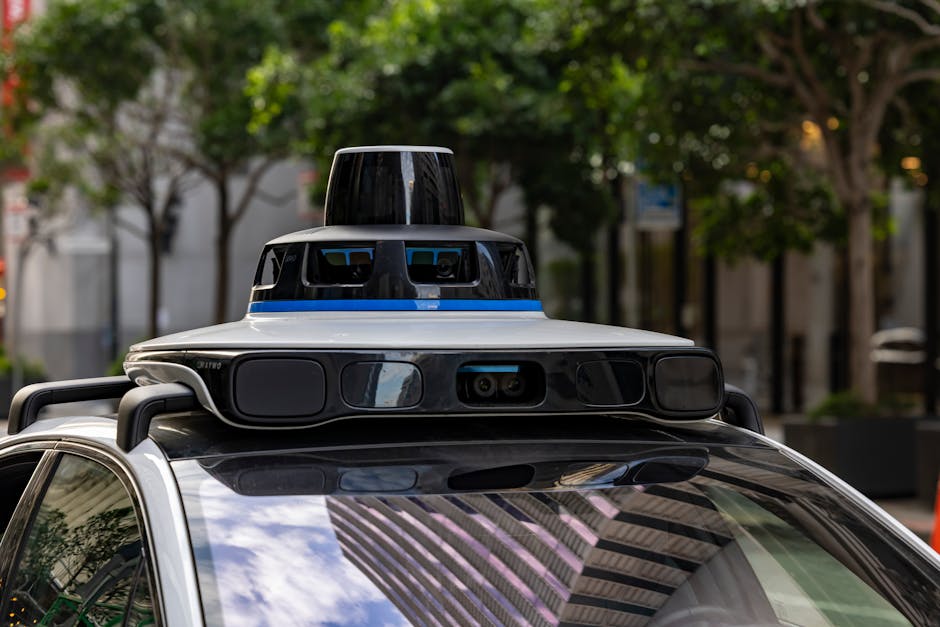
- Level 4 (High Automation): Geofenced, fully driverless operation within defined zones. Waymo and Baidu’s Apollo Go are the clearest leaders here. No human driver needed — but only within approved territories.
- Level 5 (Full Automation): Anywhere, any condition, zero human input. Honestly? We’re not there yet, and most honest engineers will tell you we’re at least a decade away from mass deployment.
One critical data point worth noting: AI processing chips specifically designed for autonomous systems — like NVIDIA’s DRIVE Thor platform — now deliver over 2,000 TOPS (Tera Operations Per Second), a figure that was unthinkable just four years ago. This raw compute power is enabling more sophisticated real-time decision trees and edge-case handling.
🌍 Global & Domestic Frontrunners: Who’s Actually Winning the Race?
Let’s look at who’s making real-world headlines, not just lab announcements.
Waymo (USA): Arguably the most advanced robotaxi operator globally. Waymo One now operates paid, fully driverless rides across Phoenix, San Francisco, Los Angeles, and — as of late 2025 — Austin and Atlanta. Their 6th-generation Waymo Driver system has logged over 30 million fully autonomous miles, with safety data suggesting a significantly lower collision rate than human drivers in comparable urban environments.
Baidu Apollo Go (China): China’s AV ecosystem is moving at a pace that often surprises Western analysts. Apollo Go has expanded to over 70 cities as of 2026, leveraging China’s aggressive smart road infrastructure — including V2X (Vehicle-to-Everything) communication networks embedded directly into road systems. The domestic policy environment has been notably more permissive for rapid testing and deployment.
Hyundai & Motional (South Korea/USA): The Hyundai-Motional partnership has been steadily deploying robotaxi services via Lyft in Las Vegas. What makes this partnership interesting is the hardware-agnostic approach — their IONIQ 5-based robotaxi is designed with scalability across multiple platforms in mind. South Korea itself updated its AV commercialization roadmap in 2025, targeting Level 4 commercial service on major expressways by 2027.
Europe’s Measured Approach: Germany, France, and the UK have each passed updated AV-specific legislation. The EU’s AI Act, fully enforced as of 2025, classifies AV decision systems as high-risk AI, meaning rigorous third-party auditing is required before deployment. This creates slower rollouts but arguably more trustworthy systems long-term.
🔍 The Honest Challenges Nobody Loves to Talk About
Here’s where I want to think through some nuance with you, because the breathless optimism you see in press releases doesn’t always match the engineering reality.
- Edge cases are still brutal: Unusual weather, construction zones, unpredictable pedestrian behavior — these remain genuinely hard problems. Rain and snow significantly degrade LiDAR and camera performance, and no fleet has cracked truly robust all-weather autonomy at scale yet.
- Regulatory patchwork: A Waymo vehicle certified in California faces completely different legal frameworks if it crosses into another state or country. Until international harmonization happens, commercial scaling stays constrained.
- Cybersecurity vulnerabilities: A vehicle that runs on AI software is a vehicle that can theoretically be hacked. The 2025 discovery of a vulnerability in a major OEM’s over-the-air update system sent shockwaves through the industry and accelerated investment in automotive-grade cybersecurity frameworks.
- Public trust gaps: Consumer surveys in 2026 consistently show that while people are curious about autonomous vehicles, a majority still feel uncomfortable riding in a fully driverless car. Trust is built over miles and incidents — it cannot be rushed.
- Infrastructure dependency: Many Level 4 systems rely heavily on HD maps and V2X infrastructure that simply doesn’t exist outside of pilot zones. Rural deployment remains a distant aspiration.
💡 Realistic Alternatives: Where Does This Leave You Right Now?
So what does all this mean if you’re a regular person trying to make practical decisions? Let’s think through a few scenarios:
If you’re buying a car in 2026: Prioritize Level 2+ ADAS (Advanced Driver Assistance Systems) features — adaptive cruise control, lane centering, automatic emergency braking. These aren’t full autonomy, but they’re genuinely life-saving and widely available. Don’t pay a premium for “full self-driving” promises that hinge on regulatory approvals that may take years.
If you live in a major metro: Keep an eye on robotaxi expansion in your city. Waymo’s waitlists have shortened considerably, and in covered zones, it’s already a practical alternative for specific use cases — airport runs, late-night travel, situations where parking is a nightmare.
If you’re a business owner in logistics: Autonomous trucking (platooning on highways, L4-capable routes) is maturing faster than passenger vehicles in some corridors. Companies like Aurora Innovation and Kodiak Robotics are offering commercial freight partnerships worth exploring if your supply chain runs major U.S. interstate routes.
Editor’s Comment : What I find genuinely fascinating about this moment in autonomous driving isn’t the technology itself — it’s the collision of engineering ambition with very human questions about trust, liability, and the nature of control. We’re essentially asking society to renegotiate its relationship with risk. The AI can already drive better than humans in many measurable ways, yet we hesitate — and that hesitation isn’t irrational. It’s deeply human. My take? The realistic near-future isn’t a world where all cars are autonomous, but one where autonomy becomes a contextual tool — a co-pilot that takes the wheel on familiar highways, hands it back in complex city centers, and earns your trust one uneventful mile at a time. That’s not a failure of the technology. That’s just how trust works.
📚 관련된 다른 글도 읽어 보세요
- Neuromorphic Chips in 2026: The Next-Generation Semiconductor Trend Reshaping AI as We Know It
- 2026년 자율주행 AI 기술 발전 현황 총정리 — 우리는 지금 어디까지 왔을까?
- How to Actually Fix Software Technical Debt in 2026 (Without Burning Down Your Codebase)
태그: [‘autonomous driving 2026’, ‘self-driving AI technology’, ‘Waymo robotaxi’, ‘autonomous vehicle trends’, ‘AI transportation future’, ‘Level 4 autonomy’, ‘driverless car technology’]
Leave a Reply