
A friend of mine — a sharp content marketer with nearly a decade of experience — sent me a frustrated message a few months back: “I’m doing everything right. Long posts, proper on-page SEO, consistent publishing. My traffic is still flat.” When I dug into her strategy, the problem was obvious. She was still doing keyword research the way we all did it in 2019: sort by volume, pick the highest number, write 2,000 words. In 2026, that approach doesn’t just underperform — it actively wastes your time and budget.
Let’s dig into what’s actually changed, what the data says, and how to rebuild your keyword strategy from the ground up.
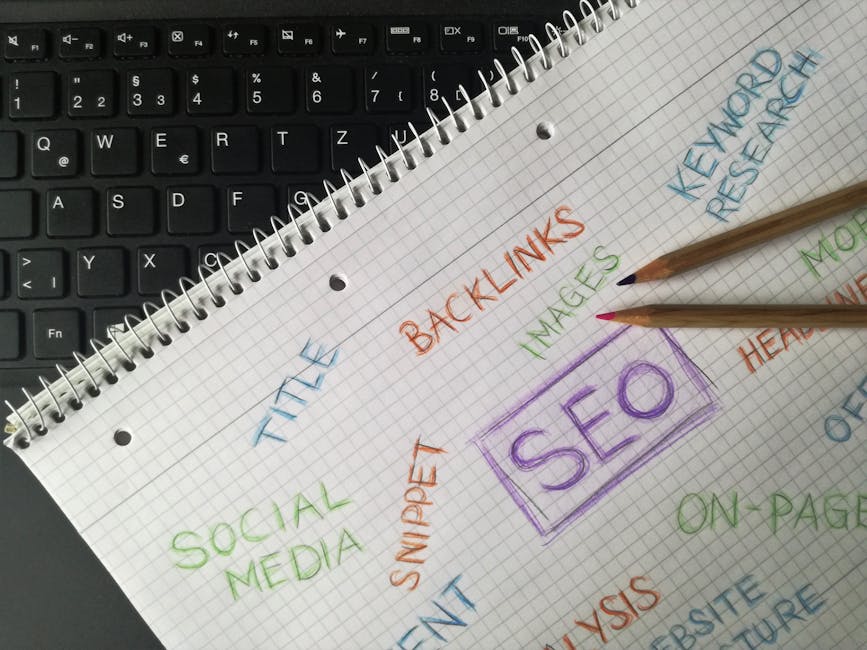
The Landscape Has Fundamentally Shifted
Here’s the uncomfortable truth first: 58.5% of all searches now result in zero clicks. That stat — drawn from SparkToro research — is the single most important number in modern SEO. It means that for more than half of every query typed into Google, the user never visits a single website. AI Overviews, featured snippets, and knowledge panels absorb the answer right on the results page.
So what does this mean for keyword strategy? It means chasing high-volume, informational head terms is increasingly a losing game unless you’re the source those AI systems cite. Keyword research in 2026 combines traditional search analysis with AI search optimization to identify the terms and topics your audience uses across Google, ChatGPT, and Perplexity. That’s a genuinely new dimension that didn’t exist even two years ago.
Keyword research has fundamentally shifted from volume-first to intent-first methodology. With 58.5% of searches now resulting in zero clicks, 91.8% of all searches being long-tail keywords, and AI search platforms accounting for growing search share, successful 2026 keyword research must serve two purposes: ranking in traditional search results and being cited in AI-generated answers.
The Real Cost of Doing It Wrong
Let’s talk ROI, because this is where the gap between good and bad keyword strategy becomes starkly financial. B2B companies using strategic keyword research achieve 702–1,389% ROI from SEO according to First Page Sage research. Sounds incredible, right? Here’s the flip side: thought leadership SEO with strategic keyword research (approximately 8 pages monthly) delivers 748% ROI over three years, whilst basic content marketing without proper keyword research (approximately 4 articles monthly) delivers only 16% ROI.
That gap — 748% versus 16% — is almost entirely explained by keyword strategy quality. Not writing quality. Not publishing frequency. Keyword strategy.
And there’s another data point worth absorbing: according to Semrush’s 2026 AI search traffic study, websites appearing in AI-generated answers receive an average of 15-20% more organic traffic compared to similar sites not featured in these responses. So optimizing for AI citation isn’t a nice-to-have — it’s a measurable traffic lever.
Intent First, Volume Second: The New Framework
SEO and AI search optimization best practices in 2026 have moved beyond keyword stuffing and mass link building, focusing instead on a cohesive, end-to-end marketing strategy that aligns with user intent and business goals. As search engines evolve with AI, semantic search, and user-first algorithms, ranking today means understanding your audience deeply, positioning your content clearly, and distributing it smartly.
In practice, this means building your keyword list around four distinct intent buckets before you even look at search volume numbers:
- Informational intent: The user wants to learn something (“how does semantic SEO work”). These are top-of-funnel — great for authority, poor for immediate conversions.
- Navigational intent: The user already knows where they want to go (“Ahrefs login”). Low opportunity unless you’re that brand.
- Commercial intent: Comparison and research mode (“Semrush vs Ahrefs 2026”). High-value territory — the user is close to deciding.
- Transactional intent: Ready to act (“buy keyword research tool”). Highest conversion potential, often highest competition.
While informational content builds authority, commercial and transactional keywords drive revenue. Filter your keyword lists to prioritize terms indicating purchase intent. If your content calendar doesn’t have a clear split across these four buckets, you’re likely over-indexed on informational content that generates pageviews but not pipeline.
Long-Tail Is Not a Consolation Prize
A lot of content teams treat long-tail keywords as the fallback — what you go after when you can’t compete for the big terms. That framing is exactly backwards. Long-tail keywords are specific phrases (3+ words) with lower volume but higher conversion rates. Research shows 91.8% of searches are long-tail, and they convert at 2.5 times the rate of short-tail terms.
Think about what that means operationally. A keyword like “keyword research” might pull 50,000 monthly searches, but ranking on page one requires domain authority most sites don’t have, and the searcher intent is so diffuse that conversion rates are microscopic. Meanwhile, “best keyword research tools for SaaS content teams” might pull 200 searches — but those 200 people are highly qualified, and you can actually rank for it.
Long-tail keywords are more specific, lower competition, and easier to rank for queries (e.g., “best free SEO tools for beginners 2026”). Using long-tail keywords, you can attract higher-quality visitors to your website. It can increase your conversion rates and establish you as an authority in your industry.

The Tool Stack That Actually Works in 2026
Let’s get concrete on tooling, because this is where a lot of people either over-spend or under-invest.
- Semrush Keyword Magic Tool: SEMrush continues to dominate the keyword research space in 2026 with its comprehensive Keyword Magic Tool, offering access to over 25 billion keywords across 142 geographic databases. Pricing starts at $119.95 per month for the Pro plan, with enterprise options available. Best for: competitor gap analysis and intent-based filtering.
- Google Keyword Planner (free): Google’s Keyword Planner received significant updates in 2026, transforming from a basic advertising tool into a comprehensive SEO resource. The enhanced version provides more granular search volume ranges and includes organic competition metrics alongside paid advertising data. New features include seasonal trend forecasting, local search insights, and integration with Google Search Console data.
- Ahrefs: Ahrefs has deeper historical SERP data and more features for analyzing what content performs best in terms of links and shares. Strong pick if backlink strategy is core to your workflow.
- AI-native tools (Frase.io, Surfer SEO, MarketMuse): AI-powered tools can significantly enhance your content strategy by offering suggestions based on search trends, user behavior, and competitive analysis. Tools like Frase.io, Surfer SEO, and MarketMuse can help identify new content ideas, suggest keywords, and highlight content gaps within your niche.
- AnswerThePublic + Reddit mining: Underrated combo for surfacing real user language — the exact phrasing people use in conversation, not the sanitized version in a keyword tool.
Competitor Keyword Research: Learn, Don’t Copy
Semrush nails competitor analysis, showing exactly what keywords your rivals rank for and letting you drill down by URL. But the goal isn’t to clone their strategy — it’s to find the gaps. Looking at your competitors’ keyword strategy is an excellent method for discovering gaps and opportunities in your content strategy. Knowing which keywords your competitors rank for can lead you to find new content ideas or SEO opportunities. Mastering competitor analysis is not so much about mimicking and more about learning from what your competitors are getting right.
A practical workflow: pull your top 3 competitors’ organic keyword lists in Semrush or Ahrefs. Filter for keywords ranking positions 4–20 (they’re ranking but not dominating). Then cross-reference against your own content inventory. Any keyword where they rank 4–15 and you have no content? That’s your content roadmap for the next quarter.
How Often Should You Update Your Keyword Strategy?
This is a question I get constantly, and the answer is more often than most teams are comfortable with. Keyword trends for 2026 are constantly evolving, and your keyword strategy should evolve as well. Regularly updating your keyword research ensures that your SEO efforts remain relevant, effective, and competitive in the changing digital landscape.
Review keyword strategy quarterly for most B2B businesses. Search behaviour, competitor positioning, and AI search patterns evolve continuously. Monthly reviews are appropriate for fast-moving industries or during major product launches. Annual keyword research is insufficient given the pace of change in 2026.
The E-E-A-T Factor You Can’t Ignore
Picking the right keywords is half the battle — the other half is making sure your content can actually compete once you target them. Experience, Expertise, Authoritativeness, and Trust (E-E-A-T) remain vital for content to rank. Include E-E-A-T signals like author profiles, citations, case studies, and original data in your content to increase credibility and influence rankings.
This is especially critical when targeting competitive commercial and transactional keywords. A generic how-to article won’t cut it. Originality is key for standing out in a crowded digital space, and content that reflects firsthand insights or unique research will likely perform better. SEO professionals should aim to produce content that thoroughly answers specific user questions, incorporating unique perspectives, case studies, and data.
Quick Recap: The 2026 Keyword Research Checklist
- ✅ Start with intent mapping, not volume sorting
- ✅ Prioritize long-tail terms (3+ words) for conversion-focused pages
- ✅ Build content that can be cited in AI-generated answers (direct Q&A format in the first 150 words)
- ✅ Use competitor gap analysis to find positions 4–20 as content opportunities
- ✅ Review and update keyword strategy at minimum quarterly
- ✅ Layer in E-E-A-T signals: author bios, original data, citations
- ✅ Track zero-click keywords separately — optimize them for AI visibility, not click-through
If your current strategy doesn’t check most of these boxes, don’t scrap everything. Start with intent mapping on your existing top 20 posts — reclassify them by intent type, identify mismatches (informational content targeting transactional queries), and fix those first. That alone often moves the needle faster than publishing net-new content.
💬 Drop a comment below — what’s the single biggest shift you’ve made to your keyword strategy this year? I’m especially curious whether anyone has started optimizing specifically for AI citation, and what’s actually working.
📚 관련된 다른 글도 읽어 보세요
- Stop Wasting Hours on Keyword Research — The 2026 Method That Actually Works
- I Wasted 6 Months Chasing Volume — Here’s How Keyword Research Actually Works in 2026
- I Wasted 6 Months Chasing Volume — The Real Keyword Research Strategy That Works in 2026
태그: []