
Picture this: it’s a Tuesday morning and your smart home system has already adjusted the thermostat, flagged an unusual pattern in your elderly parent’s movement sensors, and pre-loaded your commute route — all while consuming less power than a dim nightlight. That’s not sci-fi anymore. That’s neuromorphic computing doing its quiet, extraordinary thing in 2026.
If you’ve been hearing the term neuromorphic chip floating around tech circles but couldn’t quite pin down what makes it so different from your standard processor, don’t worry — we’re going to think through this together, step by step.
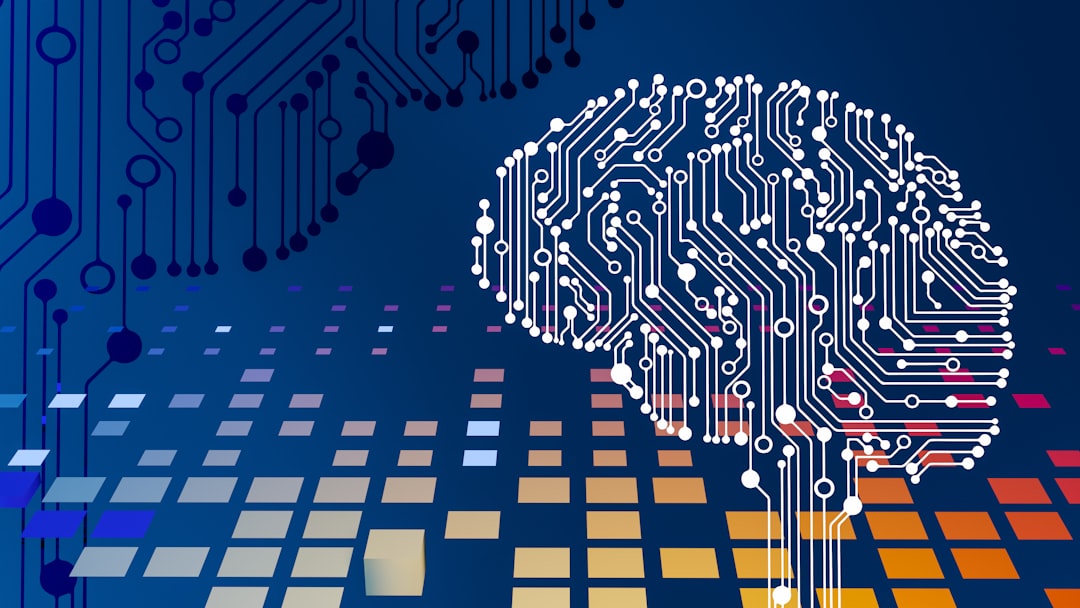
So, What Exactly Is a Neuromorphic Chip?
The word “neuromorphic” literally means brain-shaped (from the Greek morphe, meaning form). Instead of processing data in the sequential, binary on/off fashion of traditional von Neumann architecture, neuromorphic chips mimic the way biological neurons and synapses work — firing signals in parallel, learning from patterns, and adapting in real time.
Think of a conventional processor as a very fast librarian who can only fetch one book at a time. A neuromorphic chip is more like an entire research team that instinctively knows which information connects to what, without being explicitly told every single step.
The Hard Numbers Behind the Hype
Let’s ground this in some data, because that’s where things get genuinely exciting:
- Energy efficiency: Intel’s Loihi 3 architecture (unveiled in late 2025 and now in commercial deployment in 2026) reportedly processes certain AI inference tasks using up to 1,000× less energy than equivalent GPU-based systems.
- Market size: The global neuromorphic computing market was valued at approximately $8.6 billion in early 2026, with projections pushing it past $30 billion by 2032, according to industry analyst reports from MarketsandMarkets.
- Latency improvements: Edge AI applications using neuromorphic chips are demonstrating real-time response latencies under 1 millisecond — critical for autonomous vehicles and medical diagnostics.
- Korea’s domestic investment: Samsung Semiconductor and SK Hynix have jointly committed over ₩2.3 trillion (approximately $1.7 billion USD) toward neuromorphic R&D through a government-backed initiative launched in Q1 2026.
Who’s Leading the Race Right Now?
The neuromorphic semiconductor space has some fascinating players, and the competition is genuinely global.
Intel (USA) remains the most visible name with its Loihi platform. Their third-generation chip integrates over 1.15 billion artificial neurons on a single die — that’s roughly comparable to a small mammal brain in sheer neuron count, though the architecture is far simpler in connectivity than biological tissue.
IBM (USA) has taken a different approach with its NorthPole processor, which eliminates off-chip memory access almost entirely, slashing the infamous “memory wall” bottleneck that plagues deep learning workloads. In benchmark tests published in early 2026, NorthPole demonstrated image recognition performance 22× faster than comparable chips at a fraction of the energy cost.
BrainChip Holdings (Australia/USA) has carved out a niche in ultra-low-power edge applications with its Akida platform, now integrated into hearing aids, industrial sensors, and wearable health monitors globally.
Samsung (South Korea) entered the neuromorphic arena more aggressively in 2025-2026 with its HBM-integrated spiking neural network architecture — cleverly combining their world-class High Bandwidth Memory (HBM) expertise with neuromorphic logic design. This hybrid approach is seen by many analysts as potentially the most commercially scalable strategy in the field.
Imec (Belgium) and SpiNNaker 2 (UK/Germany) represent the academic-industrial pipeline in Europe, with SpiNNaker 2 from TU Dresden handling over 10 million neurons in real-time simulation, supporting large-scale brain research and robotics applications.
Real-World Applications That Are Already Here
This isn’t purely a laboratory curiosity. In 2026, neuromorphic chips are showing up in some surprisingly tangible places:
- Healthcare: Wearable ECG monitors using neuromorphic inference can detect atrial fibrillation patterns locally on the device — no cloud upload needed, no privacy risk, minimal battery drain.
- Autonomous vehicles: Lidar and radar fusion in next-gen ADAS (Advanced Driver Assistance Systems) benefits enormously from the sub-millisecond spike-timing processing these chips enable.
- Smart manufacturing: South Korean factories in the Gumi industrial belt are piloting neuromorphic-based defect detection systems that adapt to new product lines without full retraining cycles.
- Environmental sensors: Remote climate monitoring stations in polar regions use neuromorphic chips because they can run on harvested solar/thermal energy — no battery replacement logistics required.
- Consumer electronics: Always-on voice assistants that process wake words entirely on-device, making them dramatically more private and responsive.
The Honest Challenges — Because Nothing’s Perfect
Here’s where we need to be realistic. Neuromorphic computing still faces meaningful hurdles:
- Programming complexity: Spiking Neural Networks (SNNs) — the software that runs on these chips — are significantly harder to train than conventional deep neural networks. The toolchains are maturing but still lag behind PyTorch and TensorFlow ecosystems.
- Standardization gaps: There’s no industry-wide standard for neuromorphic hardware interfaces, which creates fragmentation. A model trained for Loihi doesn’t automatically transfer to Akida.
- Niche use-case dependency: For general-purpose heavy compute tasks (like training large language models), GPUs and TPUs still dominate. Neuromorphic chips shine brightest in inference, edge, and pattern-recognition tasks.
- Cost at scale: Manufacturing spiking neural network chips with analog-digital mixed-signal designs is still more expensive per unit than mature CMOS digital processes.
Realistic Alternatives Depending on Your Situation
If you’re a tech enthusiast, developer, or business decision-maker wondering how to position yourself relative to neuromorphic tech in 2026, here’s how I’d think through it:
- If you’re building edge AI products today: BrainChip’s Akida or Intel’s Loihi developer kits are accessible entry points. The learning curve is real, but the energy efficiency payoff for IoT and wearables is compelling right now.
- If you’re in enterprise AI (data centers, LLMs): GPU and TPU infrastructure still makes more practical sense for training workloads. Keep neuromorphic on your 3-5 year radar rather than pivoting immediately.
- If you’re an investor: The semiconductor materials supply chain (think: memristors, phase-change materials) supporting neuromorphic design is arguably an underappreciated angle compared to chip-maker stocks alone.
- If you’re a curious learner: Intel’s free Lava framework for programming Loihi chips has a surprisingly welcoming community. Starting with basic SNN tutorials is genuinely achievable on a weekend.
The bottom line? Neuromorphic chips aren’t replacing everything we know about computing — they’re filling a critical gap that traditional silicon has always struggled with: doing intelligent things with almost no energy, in real time, at the edge of networks where cloud connections aren’t available or desirable. That gap turns out to be enormous.
We’re watching a fundamental architectural shift happen in real time, and the fascinating part is that it’s inspired by the most sophisticated computing system we’ve ever observed — the one sitting inside your skull right now.
Editor’s Comment : What excites me most about neuromorphic computing in 2026 isn’t just the benchmark numbers — it’s the philosophical shift it represents. For decades, we’ve been making biological brains conform to how computers work (rule-based, step-by-step, energy-hungry). Neuromorphic chips finally flip that equation. We’re making computers learn to work more like us. And honestly? It’s about time. If you’re curious to go deeper, I’d recommend keeping an eye on the IEEE Transactions on Neural Networks journal and the annual Telluride Neuromorphic Cognition Engineering Workshop — both are surprisingly accessible even for non-specialists.
📚 관련된 다른 글도 읽어 보세요
- Autonomous Driving AI in 2026: How Close Are We to a Truly Driverless World?
- 6G Technology in 2026: Where Are We Now and What’s Coming Next?
- 엣지 컴퓨팅 vs 클라우드 컴퓨팅 비교 2026: 당신의 비즈니스엔 어떤 게 맞을까?
태그: [‘neuromorphic chips’, ‘next-generation semiconductor’, ‘AI hardware 2026’, ‘spiking neural networks’, ‘edge AI technology’, ‘Intel Loihi’, ‘Samsung semiconductor innovation’]