
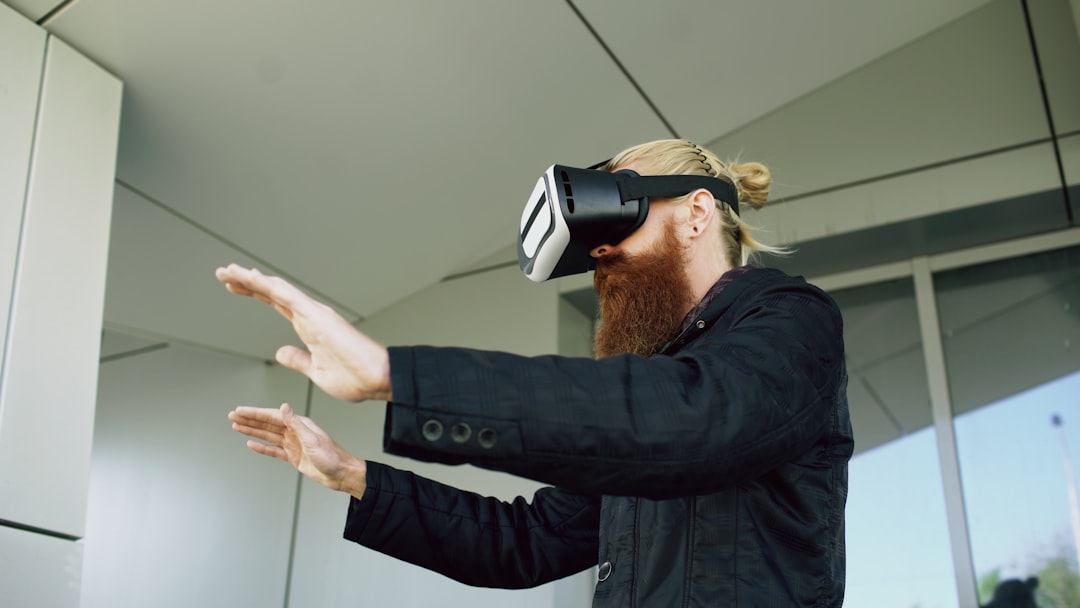
Picture this: it’s early 2026, and a friend of mine — a mid-level architect in Seoul — casually straps on a mixed reality headset during a client meeting, walks her client through a 1:1 scale virtual model of their future home, and closes the deal in under 30 minutes. No printed blueprints. No PowerPoint. Just space. That moment, she told me later, felt less like using a gadget and more like switching on a new sense.
That’s exactly the energy surrounding spatial computing and XR (Extended Reality) devices in 2026. But here’s the honest truth: the hype is real, and the confusion is equally real. So let’s actually think through what’s happening in this market — the numbers, the players, the use cases — and figure out what it means for you, whether you’re a curious consumer, a business owner, or a developer looking at your next pivot.
📊 The Market in Numbers: Bigger Than Even the Optimists Expected
By Q1 2026, the global spatial computing and XR device market has crossed the $180 billion USD threshold — a figure that would have seemed aggressive just three years ago. According to IDC’s 2026 Extended Reality Tracker report, unit shipments of standalone XR headsets grew by approximately 47% year-over-year from 2025, driven largely by enterprise adoption and a meaningful drop in entry-level device pricing.
Let’s break down what’s actually moving the needle:
- Enterprise segment dominates at ~58% of revenue — Industries like manufacturing, healthcare, real estate, and defense are the core buyers. These aren’t hobbyists; they’re organizations replacing legacy workflows.
- Consumer segment is finally maturing — Devices priced under $600 USD now represent nearly 35% of all consumer XR purchases, compared to under 12% in 2023. Accessibility is no longer just a talking point.
- Asia-Pacific leads regional growth — South Korea, Japan, and China collectively account for about 39% of global XR device shipments in 2026, with South Korea notably accelerating through government-backed XR infrastructure initiatives.
- Form factor is fragmenting — The “one headset to rule them all” dream hasn’t arrived. Instead, we’re seeing a healthy ecosystem: ultra-slim AR glasses for daily wear, high-fidelity VR headsets for immersive work, and hybrid MR devices that toggle between modes.
- Standalone > Tethered — Over 72% of newly shipped devices in 2026 are standalone (no PC or phone required), signaling that the friction of setup is finally being engineered away.
🌍 Who’s Actually Building This Future? Global & Korean Examples
The competitive landscape in 2026 is genuinely fascinating — and more diverse than the usual Silicon Valley narrative suggests.
Apple Vision Pro 2 (Global) — Apple’s second-generation spatial computer, released in late 2025, refined the original’s groundbreaking but bulky design into something noticeably lighter and priced around $2,800 USD. It’s still a premium product, but enterprise licensing deals have made it a fixture in fields like surgical planning and architectural visualization. The visionOS ecosystem has grown to over 4,200 spatial apps by early 2026 — a 3x increase from launch.
Meta Quest 4 (Global) — Meta’s latest iteration has arguably done more for mainstream XR adoption than any other single product. At ~$449 USD with improved pass-through color cameras, it sits in a sweet spot between accessibility and capability. Meta’s Horizon Workrooms continues to evolve as a genuine remote-work platform, with Fortune 500 companies now running regular all-hands meetings in virtual spaces.
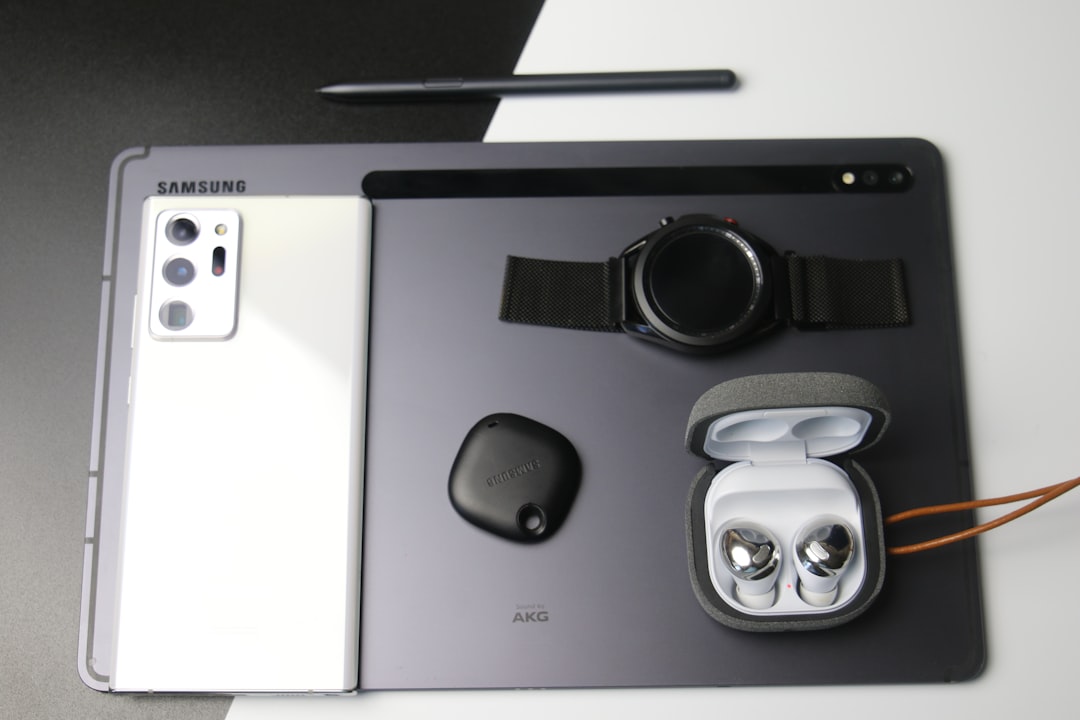
Samsung XR (Korea & Global) — Samsung’s partnership with Google and Qualcomm produced the Galaxy XR headset, officially launched in early 2026. It runs Android XR — Google’s purpose-built spatial OS — and integrates deeply with the Galaxy ecosystem. In Korea specifically, Samsung has partnered with major chaebols like Hyundai and POSCO for industrial training programs, reducing on-site training costs by a reported 31% in pilot programs.
LG Spatial Display (Korea) — Less talked about internationally, but LG’s large-format transparent OLED spatial displays are quietly becoming a staple in Korean retail and hospitality. Think department stores in Myeongdong where virtual product demos overlay physical shelving. It’s a softer, more ambient form of spatial computing that doesn’t require strapping anything to your face.
Xreal Air 3 (Global, with strong Korean adoption) — Chinese startup Xreal (formerly Nreal) has become the sleeper hit of 2026. Their ultra-light AR glasses, now on their third generation, look almost like regular eyewear and connect to smartphones. In Korea, they’ve gained traction among commuters and students — a demographic that would never wear a full headset in public but is perfectly comfortable with glasses-form AR.
🔍 The Trends That Actually Matter Right Now
Beyond the headline devices, a few underlying shifts are shaping where this market goes next:
- Spatial AI is the real differentiator — Raw display quality is now table stakes. What separates devices in 2026 is how well their on-board AI understands your physical environment, anticipates your intent, and surfaces relevant information contextually. Think of it as the difference between a map and a local guide who knows your habits.
- Health & ergonomics are finally being taken seriously — After years of reports about eye strain and neck fatigue, device makers are competing hard on comfort metrics. Weight under 150g for AR glasses and improved pancake lens optics for VR headsets are now marketing cornerstones, not afterthoughts.
- Interoperability standards are emerging — The OpenXR standard and the Khronos Group’s ongoing work mean that developers don’t have to build exclusively for one platform anymore. This is quietly enormous for enterprise adoption — companies can choose hardware without locking into a single software ecosystem.
- Privacy regulations are catching up — The EU’s AI Act implementation and Korea’s revised Personal Information Protection Act both include provisions specifically addressing spatial data collection. Businesses deploying XR in public or semi-public spaces are now navigating a more complex compliance landscape in 2026.
💡 Realistic Alternatives: Not Everyone Needs a $3,000 Headset
Here’s where I want to be genuinely useful. The spatial computing conversation often veers into expensive territory fast, and that’s worth pushing back on.
If you’re a small business owner curious about XR but not ready to invest in full headsets, start with WebXR — browser-based AR/VR experiences that work on existing smartphones. Platforms like 8th Wall and Niantic Studio let you build product visualization tools or virtual try-ons without any hardware purchase on the customer side. The barrier to entry is a developer (or a decent SaaS subscription), not a hardware fleet.
If you’re an individual exploring XR for productivity, the Xreal Air 3 or similar lightweight AR glasses at the $300–500 price point are a far more sensible starting point than a full spatial computer. Use them as extended displays for your laptop first — the “killer app” of spatial computing for most people in 2026 is still just having more screen real estate without a physical monitor wall.
If you’re a developer or creator, the Unity 6 and Unreal Engine 5.5 ecosystems now have robust spatial toolkits, and Apple’s Reality Composer Pro has matured considerably. Building skills now, even with a mid-range device, positions you well as the consumer market scales through 2027 and beyond.
The core logic here: spatial computing is not a single product category. It’s a spectrum. You don’t need to buy at the top end to participate meaningfully — you just need to match the tool to your actual use case.
Editor’s Comment : The spatial computing market in 2026 feels a lot like smartphones circa 2011 — technically impressive, occasionally awkward, and absolutely heading somewhere transformative. The difference is that the enterprise layer is pulling this transition faster than consumer desire alone ever could. My honest take? Stop waiting for the “perfect” device. Pick the entry point that solves a real problem you actually have, learn how your brain adapts to spatial interfaces, and then make smarter upgrade decisions from there. The people who’ll look prescient in 2030 are the ones experimenting today — not the ones still reading spec sheets.
📚 관련된 다른 글도 읽어 보세요
- 2026년 클라우드 네이티브 아키텍처 설계 원칙 완전 정복 – 왜 지금 당장 바꿔야 할까?
- 양자컴퓨팅 상용화 2026 전망 — 지금 우리 삶에 얼마나 가까워졌을까?
- Neuromorphic Chips in 2026: The Next-Generation Semiconductor Trend Reshaping AI as We Know It
태그: [‘spatial computing 2026’, ‘XR device market trends’, ‘mixed reality headset comparison’, ‘Apple Vision Pro 2’, ‘Samsung Galaxy XR’, ‘enterprise XR adoption’, ‘augmented reality glasses 2026’]