
Picture this: it’s 2019, and a mid-sized e-commerce company is watching their Black Friday infrastructure crumble in real time. Orders are piling up, inventory updates are lagging, and their monolithic backend — bless its heart — is gasping under the load. Fast forward to 2026, and that same company processes 10x the transaction volume without breaking a sweat. What changed? They made the leap to Event-Driven Architecture (EDA).
If you’ve been hearing the term tossed around in engineering standups or tech blog circles and wondering whether it’s just another buzzword bingo entry — let’s actually dig into what EDA looks like when it’s running in production, not just on a whiteboard.
What Is Event-Driven Architecture, Really?
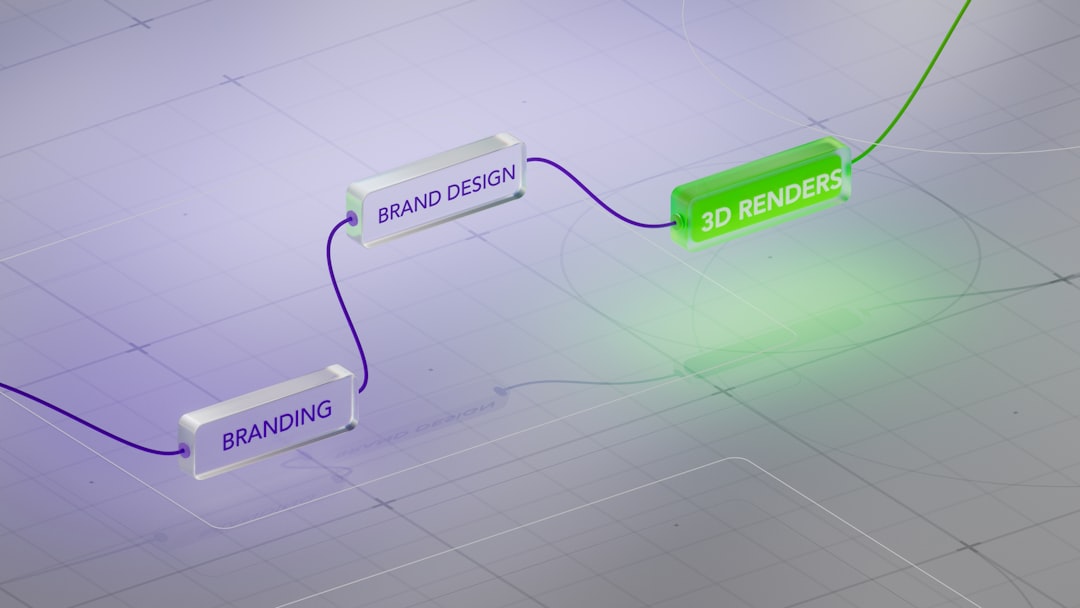
Before we dive into case studies, let’s get our bearings. EDA is a software design pattern where system components communicate by producing and consuming events — discrete records of something that happened (e.g., “OrderPlaced”, “PaymentConfirmed”, “InventoryDepleted”). Instead of Service A directly calling Service B (tight coupling), Service A fires an event into a broker (like Apache Kafka or AWS EventBridge), and any interested services pick it up asynchronously.
Think of it like a city’s public announcement system versus individual phone calls. One broadcast, many listeners — no bottleneck at the switchboard.
Body 1: The Numbers Behind EDA Adoption in 2026
The adoption curve has gone steep. According to Gartner’s 2026 Application Architecture report, over 68% of enterprises with more than 1,000 employees now have at least one production EDA workload, up from just 34% in 2022. More tellingly, organizations using EDA report:
- 40–65% reduction in system-to-system latency for non-synchronous workflows
- Up to 3x improvement in developer deployment frequency due to service decoupling
- 30% average reduction in infrastructure costs when paired with serverless consumers (e.g., AWS Lambda, Google Cloud Run)
- Improved fault isolation — when one consumer fails, others keep processing uninterrupted
- Audit trail as a native feature — event logs become your system of record for free
These aren’t marketing numbers from a vendor deck. They reflect the maturity of tooling: Apache Kafka has stabilized into an enterprise staple, AWS EventBridge has dramatically simplified event routing, and platforms like Confluent Cloud now offer managed schema registries that reduce one of EDA’s historically painful friction points — schema drift.
Body 2: Real-World Case Studies Across Industries
🛒 Case Study 1: Coupang (South Korea) — Logistics at Hyperscale
Coupang, South Korea’s dominant e-commerce and logistics giant, is a masterclass in EDA at scale. Their “Rocket Delivery” promise — same-day, often within hours — is architecturally impossible without event-driven systems. Each order triggers a cascade of events: warehouse pick-and-pack events, courier dispatch events, GPS location update events streaming from delivery drivers, and real-time customer notification events.
By 2026, Coupang’s internal event mesh processes an estimated over 2 billion events per day during peak periods. Their engineering blog has noted that migrating their inventory management system to an event-sourced model (where the current state is derived by replaying events) eliminated an entire class of consistency bugs that had plagued their legacy RDBMS-based approach.
Key takeaway: EDA isn’t just about speed — it’s about making complex, multi-step workflows auditable and recoverable by design.
🏦 Case Study 2: ING Bank (Netherlands) — Regulatory Compliance Meets Real-Time
Banking is an industry where EDA adoption has been cautiously accelerating. ING Bank’s engineering team publicly documented their shift to an event-driven core for transaction monitoring and fraud detection. The challenge was classic: their legacy batch-processing system reviewed transactions hours after the fact. By the time a suspicious pattern was flagged, the money was already gone.
After restructuring around Kafka-based event streams, ING’s fraud detection system now evaluates transactions within milliseconds of authorization. Machine learning models consume the event stream in real time, scoring each transaction against behavioral baselines. The result: a reported 27% improvement in fraud detection rates with a simultaneous reduction in false positives — meaning fewer frustrated customers getting their cards blocked for buying coffee in a new city.
Key takeaway: In regulated industries, EDA’s immutable event log also serves as a compliance artifact, reducing the overhead of constructing audit trails retroactively.
🏥 Case Study 3: Epic Systems Integration Partners (USA) — Healthcare Interoperability
Healthcare data interoperability has been a long-standing nightmare — different hospital systems, different EHR vendors, different data formats. In 2026, a growing number of regional hospital networks in the US are implementing HL7 FHIR-compliant event streams to synchronize patient data across care settings.
One notable implementation involves a network of 14 hospitals in the Midwest that built an EDA layer on top of their existing Epic and Cerner installations. When a patient is admitted to one facility, a “PatientAdmitted” event propagates to care coordination teams at affiliated facilities, triggers medication reconciliation workflows, and alerts the patient’s primary care physician — all within seconds, without any system making a direct synchronous API call to another.
This approach reduced medication reconciliation errors by an estimated 18% in the first year of operation, according to their internal quality metrics.
Common Pitfalls Worth Talking About Honestly
Let’s not pretend EDA is a free lunch. The teams that struggle most tend to hit these walls:
- Event schema management: Without a schema registry and versioning discipline, consumer services break silently when producers change their event structure.
- Eventual consistency confusion: Developers trained on synchronous, transactional systems often underestimate the cognitive shift required to design for eventual consistency.
- Observability complexity: Tracing a business transaction across 12 asynchronous event hops requires distributed tracing tooling (OpenTelemetry is your friend here) — it’s not optional.
- Dead-letter queue neglect: Failed events that aren’t monitored and reprocessed create invisible data loss. This is the silent killer of EDA implementations.
Conclusion: Is EDA Right for Your Situation?
Here’s where I want to be your pragmatic friend rather than an EDA evangelist. EDA is genuinely transformative — but it’s also genuinely complex. Let’s think through your situation together:
If you’re a startup with a team under 10 engineers: You probably don’t need EDA yet. A well-structured monolith with clear domain boundaries will serve you better, and you can extract event-driven patterns later when the pain of coupling actually arrives.
If you have a specific high-volume, decoupled workflow problem (order processing, notification systems, audit logging): Start there. Introduce a single Kafka topic or EventBridge bus for that one workflow and learn the operational patterns before going broader.
If you’re a mid-to-large enterprise dealing with integration spaghetti between departments: EDA, combined with an API gateway and a well-governed event catalog, is likely one of the highest-ROI architectural investments you can make in 2026.
The real-world cases above — Coupang, ING, healthcare networks — all share one thing: they didn’t boil the ocean. They identified the highest-pain, highest-value workflows and introduced EDA there first, built organizational competency, and expanded from a position of confidence rather than hype.
The architecture isn’t magic. The discipline around it is.
Editor’s Comment : Event-Driven Architecture has moved decisively from conference keynote material to genuine production infrastructure in 2026. What strikes me most about the case studies we explored is that the wins aren’t just technical — they’re organizational. Decoupled systems create decoupled teams, and decoupled teams ship faster with less coordination overhead. If you’re evaluating EDA for your stack right now, my honest advice is to start with a single, well-bounded use case, invest heavily in observability from day one, and treat schema governance like the first-class citizen it is. The teams that get this right aren’t the ones with the fanciest tooling — they’re the ones who understood the operational discipline before they wrote the first event producer.
태그: [‘event-driven architecture’, ‘EDA case studies 2026’, ‘Apache Kafka real world’, ‘microservices design patterns’, ‘software architecture trends 2026’, ‘real-time data streaming’, ‘enterprise architecture best practices’]