
Picture this: It’s a Tuesday morning in March 2026, and a Tokyo-based architect is walking through a building that doesn’t exist yet. She’s adjusting ceiling heights, swapping out materials, and chatting with a contractor in São Paulo — all without leaving her studio. No, this isn’t a scene from a sci-fi film. This is spatial computing in action, and it’s happening right now, more quietly and more profoundly than most headlines suggest.
I’ve been tracking this space (pun intended) for a few years, and what’s shifted in 2026 isn’t just the hardware — it’s the attitude. Spatial computing has stopped trying to replace reality and started learning how to augment it in genuinely useful ways. Let’s think through what that actually means together.
What Exactly Is Spatial Computing — And Why Does It Matter in 2026?
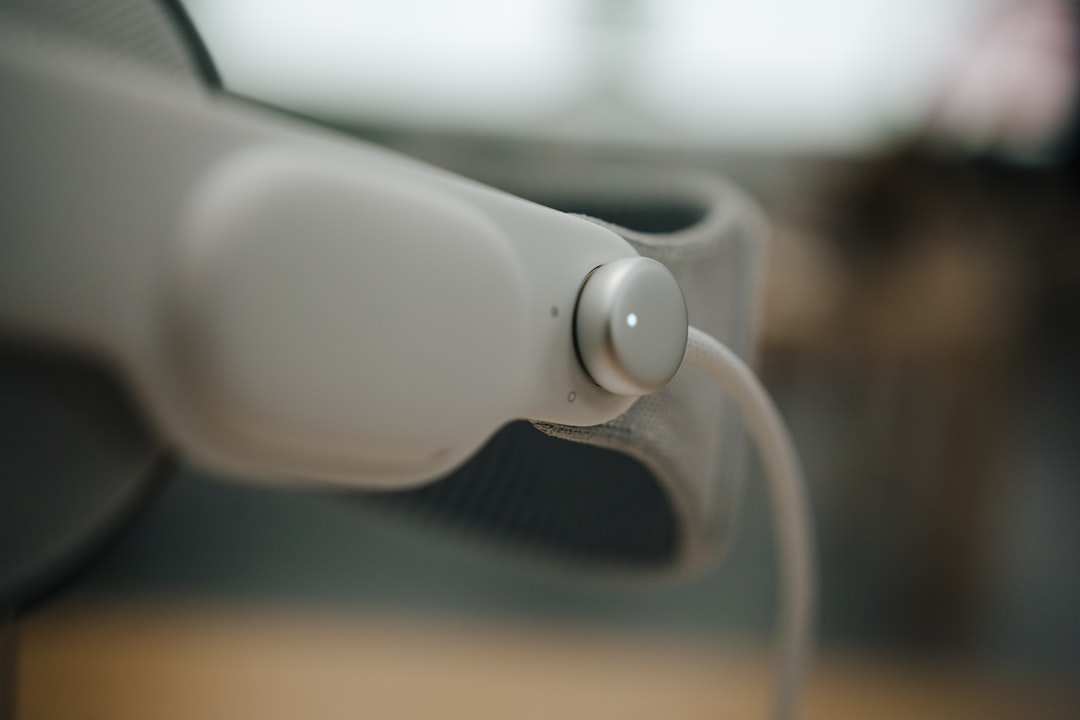
Spatial computing is the umbrella term for technologies that blend digital information with the physical world in three-dimensional space. This includes Augmented Reality (AR), which layers digital content over the real world, and Virtual Reality (VR), which immerses you in a fully digital environment. But in 2026, the lines are blurring fast — most cutting-edge devices now operate across a spectrum called Mixed Reality (MR), dynamically shifting between the two.
Here’s why 2026 is a particularly pivotal year: the global spatial computing market is projected to exceed $280 billion USD by the end of this year, up from roughly $97 billion in 2023 (Grand View Research, 2025 forecast). That’s not just growth — that’s a paradigm shift. The driver? Three converging forces:
- Hardware maturity: Devices like Apple Vision Pro’s second generation, Meta Quest 4, and Samsung’s Galaxy XR have hit price-to-performance ratios that make enterprise adoption practical rather than aspirational.
- AI integration: On-device AI now enables real-time scene understanding, meaning your AR glasses can know what they’re looking at and respond contextually — not just overlay a static image.
- 5G/6G infrastructure: Low-latency connectivity (sub-5ms in many urban corridors now) makes cloud-rendered spatial experiences feel seamless, removing the processing burden from the headset itself.
The Numbers Telling the Real Story
Let’s get specific, because the devil — and the opportunity — is always in the details.
- Enterprise adoption rate: As of Q1 2026, approximately 34% of Fortune 500 companies have deployed some form of spatial computing in operational workflows, up from 12% in 2023 (IDC, 2026).
- Training efficiency gains: Boeing reported a 40% reduction in training time for complex assembly tasks using AR-guided workflows — and that was back in 2022. Updated internal figures circulating in 2026 suggest that number has climbed to over 55%.
- Healthcare impact: Surgical AR overlays, now cleared in 47 countries including South Korea, Japan, Germany, and the U.S., have contributed to a measurable 22% reduction in procedure time for select minimally invasive surgeries (JAMA Digital Health, 2025).
- Consumer market: AR glasses (not VR headsets — actual glasses) now represent a $14 billion sub-market, driven largely by fashion-forward designs from Ray-Ban Meta and Korean brand VITURE’s global expansion.
Real-World Examples: From Seoul to Silicon Valley
Theory is great, but let’s look at where spatial computing is actually changing daily life in 2026.
South Korea — Smart Factory Revolution: Samsung SDI’s battery manufacturing plants in Cheonan have deployed AR-assisted quality control systems where technicians wear lightweight AR visors that flag micro-defects in real time. The system, developed in partnership with PTC’s Vuforia platform, reportedly cut defect-related recall costs by 31% in its first full operational year. This isn’t a pilot program — it’s now standard across their Korean domestic facilities.
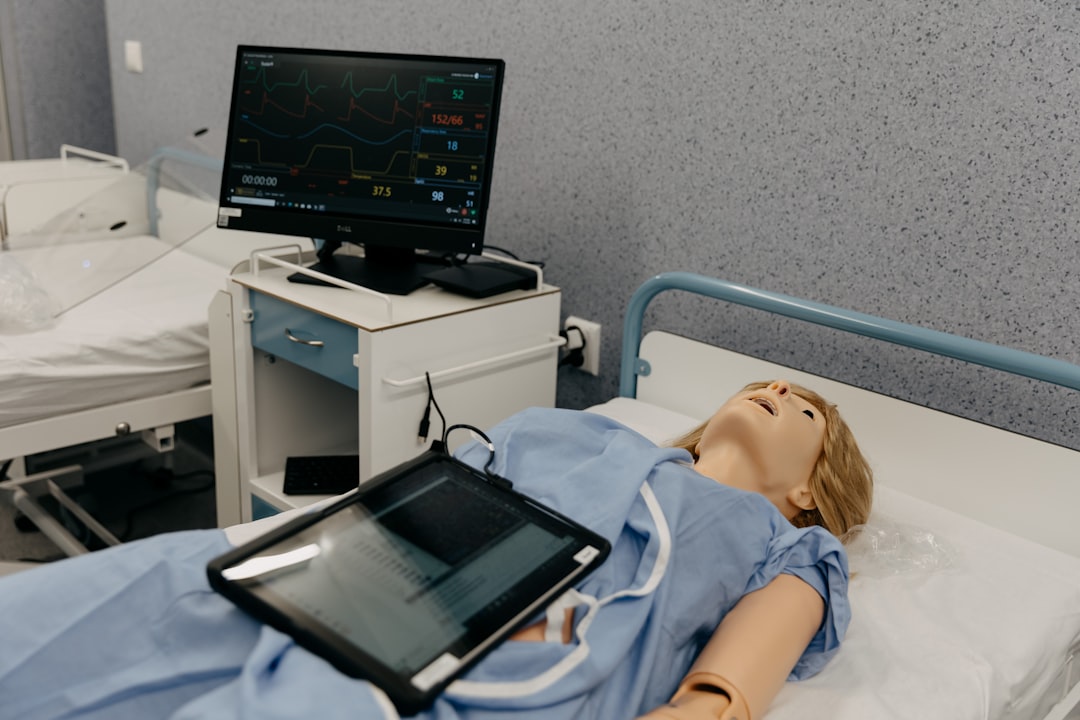
United States — Healthcare & Training: The Cleveland Clinic became the first U.S. hospital system to fully integrate spatial computing into its medical residency program. Residents now spend 30% of their simulation training in VR environments that accurately model patient-specific anatomy pulled from MRI data. The program has received provisional endorsement from the ACGME (Accreditation Council for Graduate Medical Education) as a supplement — not a replacement — to hands-on training.
Japan — Retail & Tourism: In Kyoto, a collaboration between the city tourism board and Matterport has created a fully navigable spatial map of the historic Gion district. Tourists wearing AR-capable smartphones or rented lightweight glasses receive contextual historical overlays as they walk — and yes, it actually enhances the experience rather than distracting from it, according to 78% of surveyed visitors in a 2025 pilot (Kyoto Municipal Tourism Bureau data).
Europe — Architecture & Urban Planning: Amsterdam’s city planning office now uses spatial digital twins — essentially live, 3D AR models of the city — to simulate the impact of new construction on sunlight, wind flow, and pedestrian traffic before a single permit is approved. It’s city planning that feels more like collaborative game design.
The Honest Challenges: It’s Not All Seamless
Look, I’d be doing you a disservice if I only hyped the wins. Spatial computing in 2026 still has genuine friction points worth knowing about:
- Privacy concerns: Always-on spatial mapping means these devices are constantly capturing environmental data. The EU’s updated Digital Reality Privacy Directive (2025) has added compliance overhead that’s slowing enterprise rollout in some sectors.
- Accessibility gaps: The best experiences still require hardware that costs $800–$3,500 USD. This creates meaningful access disparities, particularly in developing markets.
- Content quality variance: There’s a growing gulf between enterprise-grade AR content (excellent) and consumer AR apps (highly inconsistent). The “it’s cool for 10 minutes” problem hasn’t fully been solved.
- Physical comfort: Despite impressive engineering, extended use of headsets beyond 2–3 hours still causes discomfort for a significant percentage of users. Weight distribution and thermal management remain engineering challenges.
Realistic Alternatives: Where Should YOU Engage With This Technology?
Not everyone needs to buy a $2,000 headset tomorrow — and honestly, for most individual lifestyles right now, you shouldn’t. Here’s how to think about your actual entry points in 2026:
- If you’re a professional in a field like medicine, engineering, or architecture: The ROI case for enterprise AR tools is now solid. Push your organization to pilot programs — even a 6-month trial with something like PTC Vuforia or Scope AR will give you real data.
- If you’re a small business owner: AR-powered product visualization (letting customers “place” furniture or try on glasses virtually) has measurable conversion rate impacts. Platforms like Shopify AR and Zakeke have made this accessible without custom development.
- If you’re a curious consumer: Start with your smartphone. ARKit and ARCore experiences on iOS and Android in 2026 are genuinely impressive and free. You don’t need a headset to understand what spatial computing feels like.
- If you’re a student or career-changer: Spatial UX design and 3D content creation for AR/VR environments are among the fastest-growing skill categories on LinkedIn and Wanted.kr in 2026. Free resources on Unity and Unreal Engine 5’s XR templates are a legitimate starting point.
The smartest move isn’t to chase every new device — it’s to identify the specific problems in your life or work where an extra dimension of information would genuinely help, and work backward from there.
Spatial computing isn’t the future anymore. It’s the slightly-awkward, increasingly-useful present — and 2026 might be the year it stops feeling like a novelty and starts feeling like infrastructure.
Editor’s Comment : What excites me most about where we are in 2026 isn’t the most spectacular demo or the flashiest headset — it’s the quiet normalization. When a surgeon in Seoul and a contractor in Rotterdam both reach for their AR tools as naturally as they once reached for a clipboard, that’s when a technology has truly arrived. We’re not quite there universally, but we’re close enough to start building your own relationship with this space now, on your own terms and timeline.
태그: [‘spatial computing 2026’, ‘AR VR technology trends’, ‘augmented reality innovation’, ‘mixed reality enterprise’, ‘spatial computing market growth’, ‘XR wearables 2026’, ‘digital twin technology’]