
Imagine you’re a factory manager in Stuttgart, Germany, and your production line suddenly flags a bearing failure — not after it happens, but 72 hours before it does. No scramble. No unplanned downtime. Just a calm notification from a virtual replica of your entire plant, quietly running simulations in the background. That’s not science fiction anymore. That’s digital twin technology doing its job in 2026.
When I first started tracking digital twins back when the concept was mostly aerospace jargon, I honestly didn’t expect the technology to diffuse so rapidly across so many different sectors. But here we are, and the numbers are staggering — the global digital twin market is projected to surpass $110 billion USD by the end of 2026, growing at a compound annual rate of roughly 37% (MarketsandMarkets, 2026 Q1 report). So let’s sit down together and actually walk through what this looks like industry by industry, because the devil — and the delight — is always in the details.
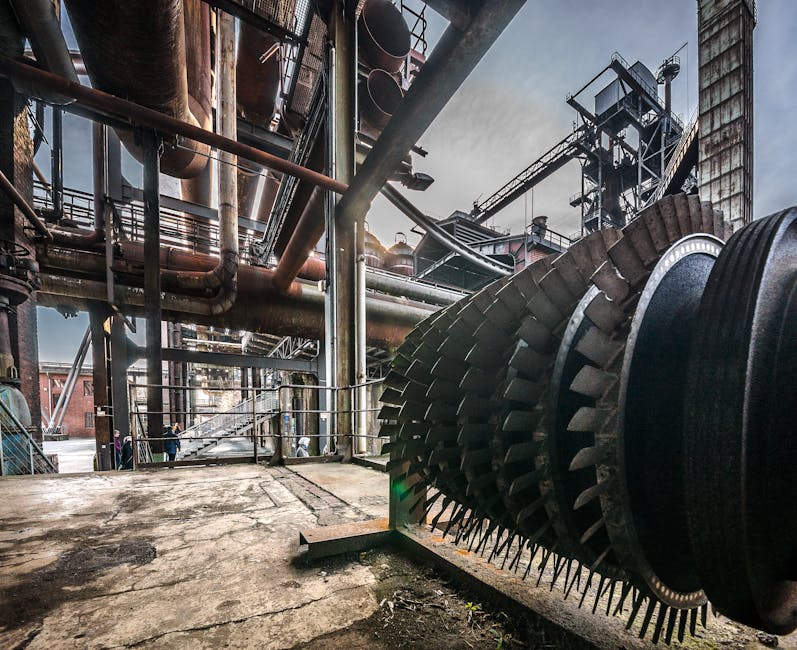
🏭 Manufacturing: The Original Home of Digital Twins
It’s no surprise that manufacturing was the first sector to broadly adopt digital twin frameworks. The concept itself was born out of NASA’s mirroring approach for spacecraft in the early 2000s, but it was Siemens and GE that industrialized the idea for factory floors.
In 2026, Siemens’ Xcelerator platform powers digital twins for over 40,000 manufacturing clients globally. What’s fascinating is the layered complexity — a modern manufacturing digital twin isn’t just a 3D model. It integrates IoT sensor feeds, real-time ERP data, physics-based simulation engines, and increasingly, generative AI to propose process optimizations. BMW’s Regensburg plant, for instance, reportedly cut retooling time by 30% after deploying a full-factory digital twin that simulates new car model assembly configurations before a single bolt is physically moved.
- Predictive Maintenance: Sensors feed real-time vibration, temperature, and pressure data into the twin, which uses ML models to predict equipment failure windows with up to 90% accuracy.
- Quality Control: Virtual stress-testing of components before physical prototypes are built, reducing prototype iterations by an average of 4–6 cycles per product line.
- Energy Optimization: Digital twins model energy consumption across production schedules, helping plants shave 15–20% off electricity costs by optimizing load distribution.
- Worker Safety Simulation: Before introducing new machinery, worker movement patterns are simulated inside the twin to identify collision risks and ergonomic hazards.
🏙️ Smart Cities & Urban Infrastructure: The Living Twin
Here’s where things get genuinely exciting for everyday people. Cities are complex, chaotic systems — and digital twins offer urban planners something they’ve never really had before: a safe sandbox to test decisions before committing billions of dollars to them.
Singapore’s Virtual Singapore initiative remains the gold standard globally. By 2026, the city-state has evolved it into a fully dynamic urban twin that integrates live traffic flows, building energy use, underground utility grids, and even crowd density during events. Urban planners used the twin to model the impact of new MRT (subway) lines on surface congestion — saving an estimated $200 million in potential infrastructure miscalculations.
Closer to home for North American readers, Las Vegas launched its city-wide digital twin in late 2024 and by 2026 has used it to redesign pedestrian zones around the Strip, reducing heat island effect by simulating shade structures and reflective materials before any construction began. Helsinki, Finland, has gone even further — its Helsinki 3D+ twin is publicly accessible, meaning any resident can log in and explore proposed zoning changes in their neighborhood. That’s civic engagement reimagined.
🏥 Healthcare: When Digital Twins Get Personal
This might be the application that will matter most to you personally in the next decade. Healthcare digital twins exist at two scales: the hospital/facility level and the deeply personal patient-level physiological twin.
At the facility level, hospitals like Massachusetts General and Seoul National University Hospital use digital twins to model patient flow, bed occupancy, and emergency room throughput. MGH reportedly reduced average ER wait times by 22% after running 6 months of twin-based operational simulations that redistributed triage workflows.
But the patient-level twin is where medicine is heading that genuinely makes my jaw drop. Companies like Dassault Systèmes (with their Living Heart Project) and newer biotech firms are building physiological twins — computational models of individual patients’ hearts, lungs, or vascular systems — that let surgeons rehearse procedures or predict how a specific drug will interact with a patient’s unique biology. By 2026, the FDA has approved several clinical pathways where digital twin simulation data can substitute for certain phases of drug trials, dramatically accelerating time-to-market for targeted therapies.
⚡ Energy & Utilities: Grid Intelligence at Scale
The energy sector’s digital twin adoption in 2026 is being turbocharged by one unavoidable reality: the grid is more complex than ever. With renewable sources, distributed generation, EV charging demands, and aging infrastructure all converging simultaneously, utilities need real-time modeling capabilities that physical inspection simply cannot provide.
Ørsted, the Danish offshore wind giant, uses digital twins of its entire wind turbine fleet across the North Sea. Each turbine’s twin aggregates blade stress data, wind shear modeling, and corrosion indicators to predict maintenance needs 3–6 months out. The result? A 40% reduction in unplanned offshore maintenance visits — which, given the cost of dispatching boats and crews to open sea, translates to hundreds of millions in savings annually.
In South Korea, KEPCO (Korea Electric Power Corporation) has deployed a national grid digital twin that models real-time load balancing across its entire transmission network, factoring in solar generation variability and industrial demand spikes. During the record summer heat of 2025, the twin’s predictive load-shedding recommendations prevented an estimated 3 regional blackouts.

🚢 Logistics & Supply Chain: Seeing the Invisible
Post-pandemic, the supply chain world learned a brutal lesson: what you can’t see will hurt you. Digital twins are now being positioned as the antidote to supply chain opacity.
Maersk, the world’s largest container shipping company, operates a full digital twin of its global vessel fleet and port operations. In 2026, their twin integrates satellite AIS (Automatic Identification System) data, weather modeling, port congestion feeds, and customs processing times to dynamically reroute shipments. They’ve publicly stated this reduced fuel costs by 12% fleet-wide and cut average delivery variability by 2.3 days — which sounds modest until you realize that at Maersk’s scale, that’s billions of dollars in supply chain reliability improvements.
For smaller operators wondering if this is only for multinationals — it’s not anymore. Cloud-based platforms like AWS Supply Chain and Blue Yonder’s Luminate now offer twin-lite capabilities that mid-market logistics firms can subscribe to without building proprietary infrastructure from scratch.
🏗️ Real Estate & Construction: Building It Right the First Time
The construction industry has historically been one of the least digitized major sectors — but digital twins paired with BIM (Building Information Modeling) are changing that rapidly. In 2026, major infrastructure projects in the UK, UAE, and South Korea now mandate digital twin deliverables as part of project specifications.
The NEOM megaproject in Saudi Arabia — ambitious as it is controversial — is being designed and project-managed almost entirely through a digital twin environment. Every structural element, utility pathway, and environmental impact parameter is modeled before ground breaks. The Burj Khalifa’s original construction took years of physical mock-ups and rework; future skyscrapers built with mature digital twin workflows are projected to reduce construction rework costs by up to 25%.
💡 Realistic Takeaways: What This Means for You Depending on Your Situation
Not everyone reading this is a Boeing engineer or a city planner with a $50 million infrastructure budget. So let’s be practical about where digital twin thinking applies to different readers:
- If you run a small-to-mid manufacturing operation: Look at entry-level twins via platforms like PTC ThingWorx or Siemens’ SME-tier Xcelerator bundles. Start with one machine or one production cell — you don’t need to twin your whole factory on day one.
- If you’re in real estate development: Insist on BIM-Level 3 deliverables from your architecture firms and understand that the twin you receive at project handover has long-term operational value for facility management.
- If you’re a healthcare administrator: Operational twins for patient flow are commercially available and ROI-positive within 18 months for hospitals with 200+ beds. This isn’t experimental anymore.
- If you’re a student or career-switcher: Skills in IoT data integration, Unity/Unreal Engine (for visualization), and simulation platforms like ANSYS or MATLAB are legitimately hot in 2026 job markets. Digital twin engineering is a career path, not just a buzzword.
- If you’re an investor: The infrastructure layer — edge computing, IoT sensor hardware, and cloud simulation platforms — is where durable value is being created, not just the “digital twin” branding layer on top.
The honest reality is that digital twins aren’t magic. They’re only as good as the data flowing into them, the physical sensor infrastructure supporting them, and the human expertise interpreting them. Organizations that treat a digital twin as a one-time purchase rather than a living, maintained system will be disappointed. But those that embed twin-thinking into their operational culture? They’re building a genuinely durable competitive advantage.
Editor’s Comment : What I find most compelling about digital twins in 2026 isn’t the flashy simulations — it’s the democratization happening quietly beneath the surface. Five years ago, this was Siemens and Boeing territory. Today, a mid-sized logistics company in Busan or a regional hospital network in Ohio can meaningfully engage with twin technology. The question worth sitting with isn’t “Is this relevant to my industry?” — it almost certainly is. The better question is: “What’s the smallest meaningful twin I could build right now that would teach me something I can’t currently see?” Start there.
태그: [‘digital twin applications 2026’, ‘digital twin industry use cases’, ‘smart manufacturing technology’, ‘smart city digital twin’, ‘digital twin healthcare’, ‘IoT digital twin examples’, ‘digital twin market trends 2026’]