
Picture this: you’re driving home late at night, and your car’s onboard system quietly reroutes you around a sudden road closure — without ever pinging a remote server, without a single blip of cloud latency. That’s not science fiction anymore. That’s Edge AI doing its thing in 2026, and honestly? It’s one of the most quietly radical shifts happening in consumer technology right now.
If you’ve been hearing the term “Edge AI” thrown around but haven’t quite nailed down what it means in practical terms, let’s think through it together. At its core, Edge AI means artificial intelligence processing that happens locally — on the device itself — rather than shipping your data off to a distant cloud server. The “edge” refers to the edge of the network: your phone, your smart speaker, your car, your wearable. The implications of that shift are enormous, and in 2026, they’re finally becoming tangible in everyday life.

📊 The Numbers Don’t Lie: Edge AI Is Exploding in 2026
Let’s ground this in some data, because the scale of what’s happening is genuinely staggering. According to IDC’s 2026 Worldwide Edge Computing Forecast, global spending on edge computing infrastructure — much of it AI-driven — is projected to surpass $350 billion by the end of this year, a jump of nearly 28% year-over-year. Gartner’s 2026 Emerging Tech Hype Cycle has pushed Edge AI out of the “peak of inflated expectations” and firmly into the “slope of enlightenment,” meaning real, functional deployments are now outpacing the hype.
What’s fueling this? A few converging forces:
- Next-gen neural processing units (NPUs): Chips like Qualcomm’s Snapdragon 8 Elite 2 and Apple’s M5 Neural Engine can execute trillions of operations per second locally, making on-device large language model inference actually practical.
- Shrinking model sizes: Techniques like quantization and model pruning have allowed AI models that once required a data center to run comfortably on a 6-gram wearable chip.
- Privacy legislation pressure: With GDPR enforcement ramping up in Europe and the US Federal Data Privacy Act now in effect, companies have a legal incentive to process sensitive data on-device rather than in the cloud.
- Latency demands: Real-time applications — autonomous vehicles, surgical robots, AR glasses — simply cannot afford the 50-200ms round-trip delay of a cloud query. Edge AI eliminates that bottleneck entirely.
🌍 Real-World Applications: What’s Actually Deployed Right Now
This is where it gets fun. Let’s walk through some genuinely impressive examples from both sides of the globe that show Edge AI isn’t a roadmap promise — it’s already in people’s pockets and homes.
Samsung Galaxy AI Hub (South Korea / Global): Samsung’s 2026 Galaxy S25 series introduced what they call the “Galaxy AI Hub,” a dedicated on-device AI orchestration layer. It handles real-time language translation during phone calls, live scene recognition in the camera app, and personalized health coaching through Galaxy Watch 8 — all without a single data packet leaving your phone. Samsung reported a 40% reduction in AI-related battery drain compared to cloud-offloaded equivalents, which is a massive quality-of-life win.
Waymo’s 7th-Generation Autonomous Stack (USA): Waymo’s latest robotaxi fleet in San Francisco and Phoenix runs a hybrid Edge AI architecture where 93% of real-time driving decisions are made by onboard processors. Cloud connectivity is reserved for map updates and fleet-wide learning. The result? Safe operation even in tunnels or areas with zero cellular coverage — a critical safety threshold that previous generations couldn’t clear.
Siemens MindSphere Edge (Germany / Industrial IoT): In manufacturing, Siemens has deployed Edge AI nodes directly on factory floor equipment across 200+ plants in Germany and Poland. These nodes detect micro-vibrations in machinery that predict bearing failures up to 72 hours in advance, reducing unplanned downtime by 31%. No sensitive production data ever leaves the factory floor — a huge win for industrial security.
Kakao Brain’s On-Device Medical AI (South Korea): In a fascinating domestic example, Kakao Brain partnered with Seoul National University Hospital in 2026 to deploy dermatological AI directly on doctors’ tablets. The system analyzes skin lesion images and flags potential malignancies in under 800 milliseconds — entirely on-device — protecting patient privacy and enabling use in rural clinics with poor internet connectivity.
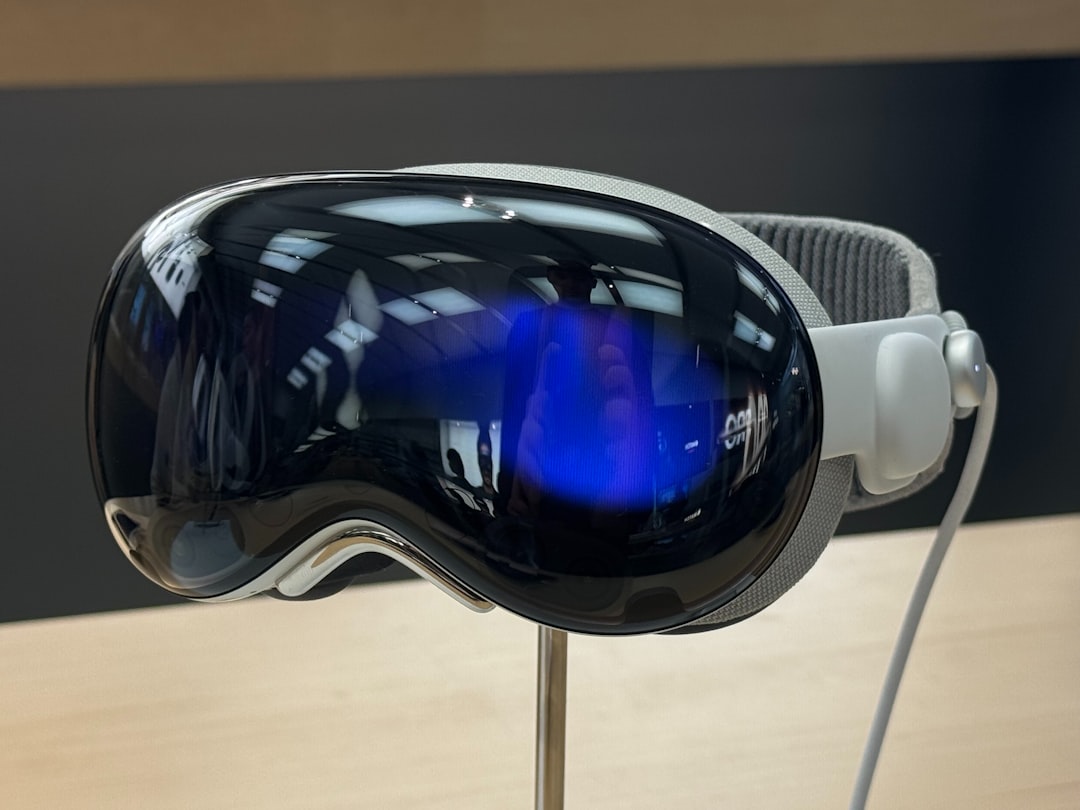
Meta Ray-Ban Smart Glasses Gen 4 (Global): Meta’s latest wearable iteration processes visual context — reading menus, identifying landmarks, recognizing faces of consented contacts — entirely through an onboard Snapdragon AR chip. The 2026 model added real-time multilingual subtitle overlay for in-person conversations, all processed locally. It’s the most convincing argument yet that AR glasses might actually become mainstream.
🤔 But Wait — Edge AI Isn’t Perfect. Let’s Be Honest About the Trade-offs
Here’s where I want to think critically with you, because Edge AI comes with real constraints that don’t always get the spotlight they deserve.
- Model capability ceiling: On-device models are necessarily smaller and less capable than their cloud-hosted cousins. Your phone’s local LLM can handle conversational tasks well, but deep multi-step reasoning still benefits from cloud inference. The smart play is hybrid architecture — local for speed and privacy, cloud for heavy lifting.
- Update complexity: Pushing AI model updates to millions of dispersed edge devices is logistically nightmarish compared to updating a single cloud endpoint. Companies like Qualcomm and MediaTek are building over-the-air neural model update frameworks, but it’s still an unsolved challenge at scale.
- Hardware fragmentation: Unlike cloud AI where you control the hardware, Edge AI must run across wildly different chip architectures. Developers often have to optimize separately for Apple Silicon, Qualcomm, Samsung Exynos, and MediaTek — a significant cost multiplier.
- Thermal and battery constraints: Sustained on-device AI inference generates heat and drains batteries. Extended AI-heavy tasks on wearables especially still push thermal limits that chipmakers are actively working to resolve.
💡 Realistic Alternatives and Strategic Takeaways for 2026
So what does this mean if you’re a consumer, a developer, or a business decision-maker? Let me offer some grounded, practical thinking:
For consumers: When upgrading devices in 2026, prioritize models that explicitly advertise dedicated NPUs (Neural Processing Units). This isn’t just a spec-sheet buzzword anymore — it directly determines how much AI capability your device can handle privately and quickly. If privacy matters to you (and it should), ask specifically which AI features run on-device versus in the cloud.
For developers and startups: Don’t try to port your full cloud model to the edge. Instead, design with a “local-first” philosophy — identify which parts of your AI pipeline genuinely need real-time, low-latency, or privacy-sensitive processing, and optimize those specifically for edge deployment. Tools like Google’s MediaPipe, Apple’s Core ML, and Qualcomm’s AI Hub SDK make this far more accessible in 2026 than it was even two years ago.
For enterprises: The industrial IoT space is arguably the most mature Edge AI deployment environment right now. If your operations involve machinery monitoring, quality control vision systems, or real-time logistics, a pilot Edge AI deployment in 2026 has a credible ROI case. The Siemens example above — 31% downtime reduction — is representative of what well-scoped industrial edge projects can achieve.
The broader takeaway? Edge AI in 2026 isn’t about replacing cloud AI — it’s about making intelligence contextually appropriate. Some decisions need the full horsepower of a data center. Others need to happen in 20 milliseconds on a chip smaller than your thumbnail. The most sophisticated systems now know which is which, and that intelligence about intelligence is perhaps the most interesting development of all.
We’re genuinely at an inflection point where the devices around us aren’t just connected — they’re capable of thinking, in real time, on their own terms. That’s worth paying attention to.
Editor’s Comment : Edge AI might be one of those rare tech trends where the reality in 2026 is actually more interesting than the hype suggested. The convergence of tinier chips, smarter model compression, and genuine regulatory tailwinds has pushed this from lab curiosity to everyday infrastructure faster than most analysts expected. If you’re only thinking about AI as something that lives in a distant data center, it might be time to look down at the device in your hand — the intelligence is already there.
태그: [‘Edge AI 2026’, ‘smart device AI’, ‘on-device machine learning’, ‘neural processing unit’, ‘AI wearables’, ‘Edge Computing trends’, ‘privacy-first AI’]